Andy Murray reflects on life in the shadow and spotlight of the ‘Big Four’
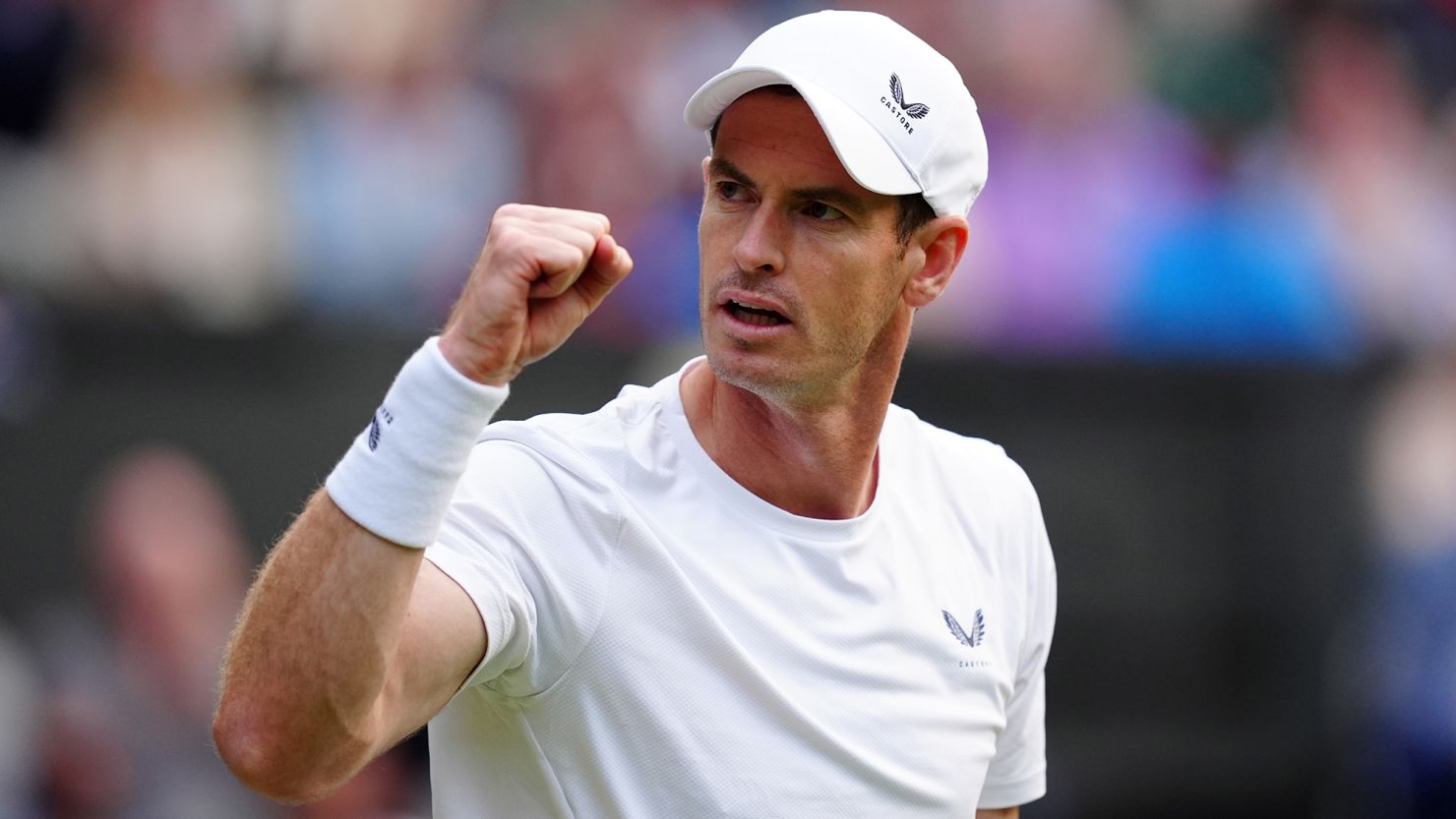
In the golden age of men’s tennis, Andy Murray was both a giant and, somehow, an underdog.
Sitting alongside Roger Federer, Rafael Nadal, and Novak Djokovic, Murray’s career unfolded like a high-wire act between greatness and comparison.
In a new interview with The Tennis Podcast, the three-time Grand Slam champion and two-time Olympic gold medalist opened up about life in the thick of that elite circle, and the clarity that retirement has brought.
“I spent my whole career, you know, sort of getting compared to… your results are getting compared to Roger Federer or Novak Djokovic and Nadal,” Murray admitted. “When you’re looking at them and you’re seeing that they’ve won 10 Grand Slams, 15 Grand Slams, 20 Grand Slams… the achievements when you’re just in the middle of that, you know, seem like insignificant almost.”
That feeling of insignificance, he says, clouded much of his perspective during his playing days. Being World No. 3 or 4 often felt more like being an also-ran than a global champion.
“At times, you know, when I was in the middle of it, being like number three in the world or four in the world, and it’s like, ‘Ah, it’s rubbish.’ Or you get to the final of the Australian Open for the fifth time and it’s a terrible result.”
But just ten days after retiring, something shifted.
“My perspective completely changed on my own career,” Murray said. It wasn’t some dramatic revelation, but rather a series of small, humanizing moments. One stood out: watching his daughter finish seventh in a school cross-country race. “I was like, ‘Oh my god, that is unbelievable! That is so good!’ But when I was playing tennis, like finished second in one of the biggest competitions, and you’re like, ‘This is just a disaster.'”
Murray’s place in the so-called “Big Four” has always been a subject of debate. To him, the hierarchy was clear. “I’m fully aware where I sit in the pecking order there,” he said. “I know that what all of those guys have gone on to achieve is far superior to anything that I did on the tennis court.”
Yet, he also sees the era through a wider lens.
“There was a period like in the middle part of my career where most major events—whether that was the Slams, Masters Series, Olympics, Davis Cup—that one of those four players was winning,” he noted. “Now granted, most of the time it was them, but it wasn’t always.”
One moment that cemented Murray’s standing among the greats came not on the court, but at Rafael Nadal’s emotional retirement ceremony at Roland Garros. “I didn’t ask to go to Rafa’s ceremony. He asked for me to go,” Murray clarified. “When people say to me like, ‘Oh, you know, what’s he doing there? Why is he there?’ Well, I didn’t invite myself to go along.”
Being invited, he said, was a moment of validation. “Yeah, I was like, ‘Yeah, great. Yeah, I’d absolutely be there.’ If that’s what he wanted.”
Now, in retirement, Murray finds pride not only in his titles, but in having held his ground during tennis’s most fiercely contested era.
“Like when I watch myself play now—which is rare—the odd thing pops up on my Instagram feed or whatever—I like watching myself play now,” he said. “When I was playing, it was like so judgmental of like everything. It’s like, ‘Oh, you know, ball toss is wrong,’ or ‘God, that forehand’s so bad.’ Whereas now, like I watch it and I’m like, ‘Wow, like yeah, it was good. Like I could play pretty well.'”
That shift, from relentless self-critique to something bordering on peace, defines Murray’s post-tennis identity. He’s no longer chasing shadows or headlines. Instead, he’s watching hockey matches in the rain, doing school drop-offs, and occasionally catching glimpses of his past on a screen.
Now with admiration, not anxiety.
“I’m proud to have been part of that period,” Murray said. “And again, I’m fully aware that they’ve… what they’ve achieved is incredible. And I think it’s amazing what they’ve done. But yeah, there was a period in the middle part where I was competing against them for the biggest tournaments most weeks.”
And for a man once too focused to feel proud in the moment, that might just be his biggest win yet.