Jack Draper pulls out of Australian Open, decides longevity trumps glory
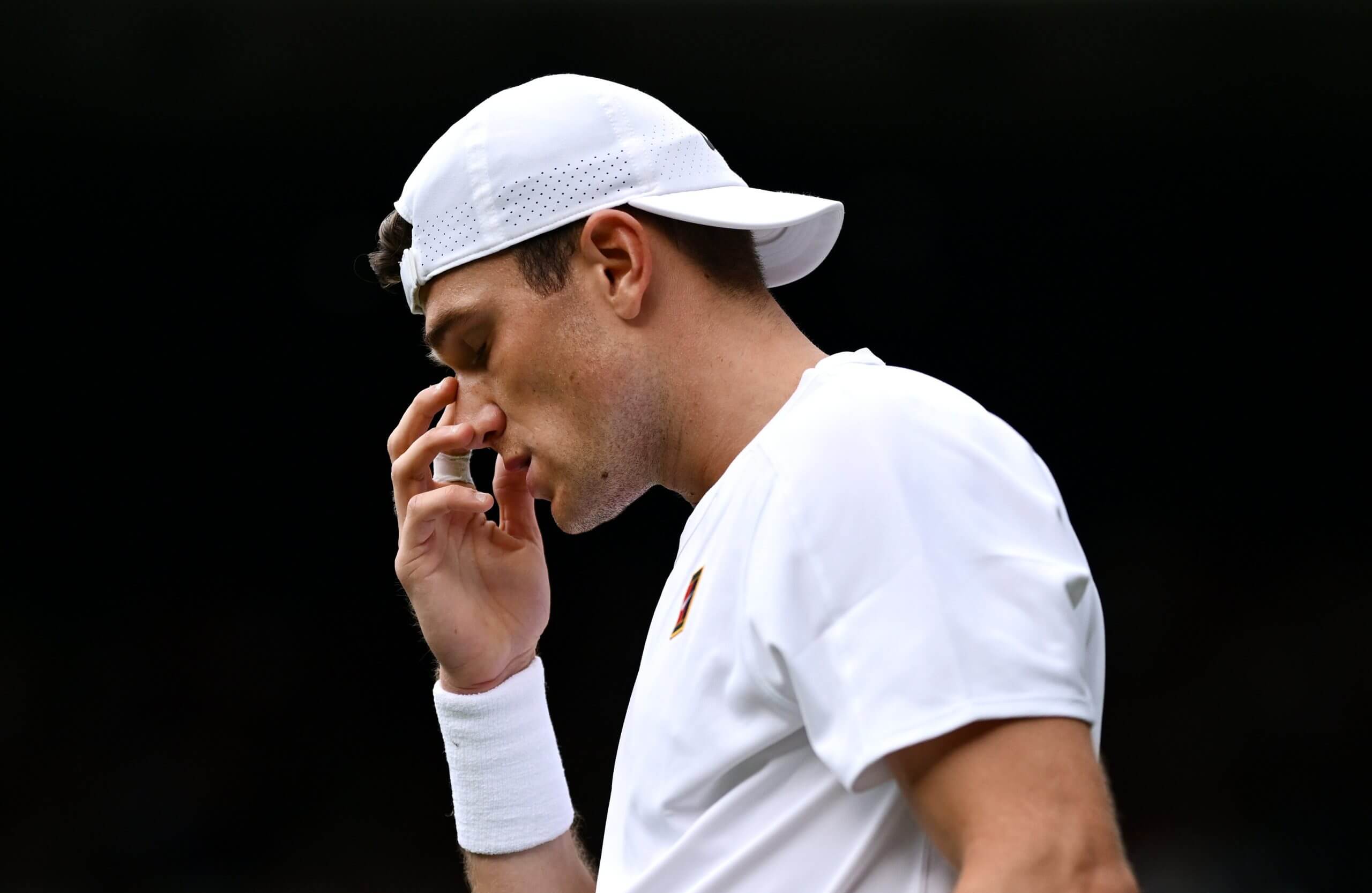
It was difficult to watch the video Jack Draper released on Boxing Day without feeling a sharp pang of sympathy, mixed with a frustrated sense of déjà vu.
Just days before Christmas, footage from the Weybridge Tennis Center had circulated showing a buoyant Draper, seemingly ready to board the flight to Melbourne.
He spoke then of resilience, of standing still or keeping going. We believed him because we wanted to. But the sombre update that dropped on December 26 told a different story. The British No. 1 will not be at the Australian Open.
For those of us tracking the trajectory of men’s tennis, this is a bitter pill. Draper’s withdrawal extends his exile from the tour to five months, a gap that feels like an eternity in a sport that never sleeps.
The bone bruising in his serving arm — specifically the humerus — has proven to be a stubborn, silent adversary. He called it the “most complex” and “challenging” injury of his career, a heavy admission from a 24-year-old who has already lost significant chunks of time to shoulder and abdominal issues.
I’ve argued before that Draper is the necessary third vertex in the geometry of modern tennis, the man capable of disrupting the Sinner-Alcaraz duopoly.
We saw the proof in Indian Wells last March, where he dismantled Carlos Alcaraz en route to his maiden Masters 1000 title. That victory felt like a coronation, propelling him to a career-high World No. 4 by June. He didn’t just look like a contender; he looked like a fixture.
Yet, the fragility that has shadowed his rise has returned.
The timeline of this injury is particularly cruel. It began whispering during the clay swing, grew louder at Wimbledon, and finally shouted him down at the U.S. Open in late August. He managed to win a round in New York before the pain forced a withdrawal, and we haven’t seen him in a competitive match since.
The decision to skip Melbourne is, frankly, the only adult in the room. Attempting to navigate the brutal reality of best-of-five-set tennis on hard courts with a healing bone bruise would be bordering on professional malpractice.
The risk of escalating a bruise into a stress fracture is simply too high. As Draper noted, he is at the “very, very end stages” of recovery. To gamble his long-term future for the sake of one tournament, even a Grand Slam, would be foolish.
However, the pragmatic validity of the decision doesn’t make the consequences any less severe.
By the time Draper potentially returns, perhaps sometime in February — he will have zero momentum and a mountain of points to defend.
The 1,000 points from his Indian Wells triumph loom large on the horizon. If he isn’t match-sharp by March, his ranking, currently holding at No. 10, could take a precipitous tumble.
There is a sense of arrested development here that is hard to shake. The ATP Tour needs Jack Draper. It needs his lefty serve, his imposing physicality, and the genuine threat he poses to the very best. But talent is theoretical without availability.
“It always seems to make me more resilient,” Draper said in his statement.
I believe him. He has bounced back before. But as he sits out the Australian summer, watching his peers battle in the Melbourne heat, he will know that 2026 has transformed from a season of consolidation into a season of reconstruction.
He is making the smart play, undoubtedly. I just wish the smartest play didn’t involve us waiting another month to see one of the world’s best talents pick up a racket.