The steel beneath the silk and the gritty resurrection of Grigor Dimitrov
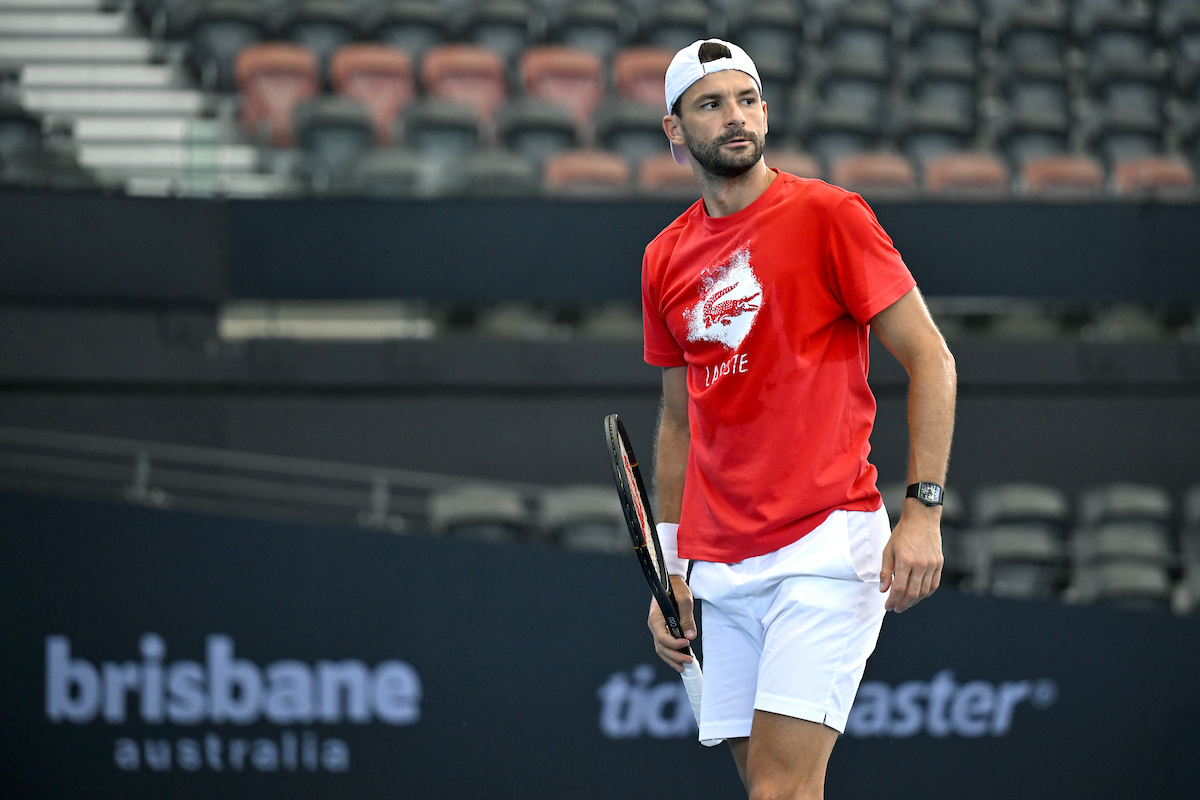
The humid air of Queensland has always seemed to agree with Grigor Dimitrov. As he stepped back onto the familiar grounds of the Pat Rafter Arena for his tenth appearance at the Brisbane International, the elegance that has defined his career was on full display.
Yet, beneath the fluid one-handed backhand and the effortless movement lies a story of physical struggle and a grueling rehabilitation process that few fans witnessed. For the Bulgarian star, returning to this tournament wasn’t just a scheduling choice. It was a hard-earned victory over his own body.
Reflecting on the road to recovery, Dimitrov didn’t shy away from the difficulty of the recent season.
“It’s been a very rewarding few months”, he noted, though that reward came only after a period of significant trial. While the tennis world often focuses on the highlight reels, the former world number three was busy battling the silence of a training room.
“The past few months have been quite challenging for me”, he admitted, acknowledging that the path back to top-flight competition was anything but linear.
The core of the struggle was a chest injury that threatened the very mechanics of his game. For a player whose style relies on explosive serves and whipping forehands, a pectoral issue is more than a setback. It is a fundamental threat. Dimitrov recalled the darkest points of that journey with startling honesty.
“There were some painful moments for sure”, he said. The frustration wasn’t just about the physical ache, but the limitation of his craft. He described the agony of “not being able to really do the things you want to do… not being able to hit a forehand or a serve”.
During this period, the doubt could have easily taken hold. When a player’s ranking begins to slip due to inactivity or compromised play, the narrative often shifts toward the end of an era.
Dimitrov, however, remained steadfast in his self-belief. “I feel my game is right there. I don’t think my ranking at the moment shows really what I’m capable of”, he asserted.
To bridge the gap between his current standing and his true potential, he knew he had to prioritize his physical integrity above all else. “I need to stay healthy, I think this is the number one thing for me”.
The “challenging” months he referenced were spent rebuilding his strength from the ground up. This wasn’t about fine-tuning a cross-court winner; it was about the basics of human movement.
He shared the milestones of his progress with a sense of relief, noting that the days of restricted movement were finally behind him. “I’m back in the gym. I’m doing push-ups, chin-ups, and all that”, he said, a testament to the blue-collar work required to maintain an elite athletic frame.
It was this internal fire that prevented him from walking away when the recovery felt slow.
“I didn’t want to stop. I knew I had it in me”, he reflected. This resilience was bolstered by a shift in his inner circle, a “work in progress” that involved a total reshuffling of his coaching and fitness staff. He also credited the emotional stability provided by those closest to him during the recovery.
He explained that “having the right people around you” made the difference when the tour felt isolating. This support “gave me a little bit of a different perspective” and, crucially, “it gave me that extra kick” to push through the final stages of rehab.
Now, as he eyes a potential third title in Brisbane, the “Prince” of Bulgarian tennis looks less like a man defending a legacy and more like a contender reclaiming his territory. The aesthetic beauty of his game remains, but it is now supported by a reinforced physical foundation.
The message to the locker room is clear. The ranking is temporary, but the drive is permanent. “I’m hungry for more”, Dimitrov declared. For a man who has traversed “painful moments” to hit a single serve, that hunger is the most dangerous weapon he carries into the new season.