Emma Raducanu triumphs in Melbourne with a preparation strategy that defies logic
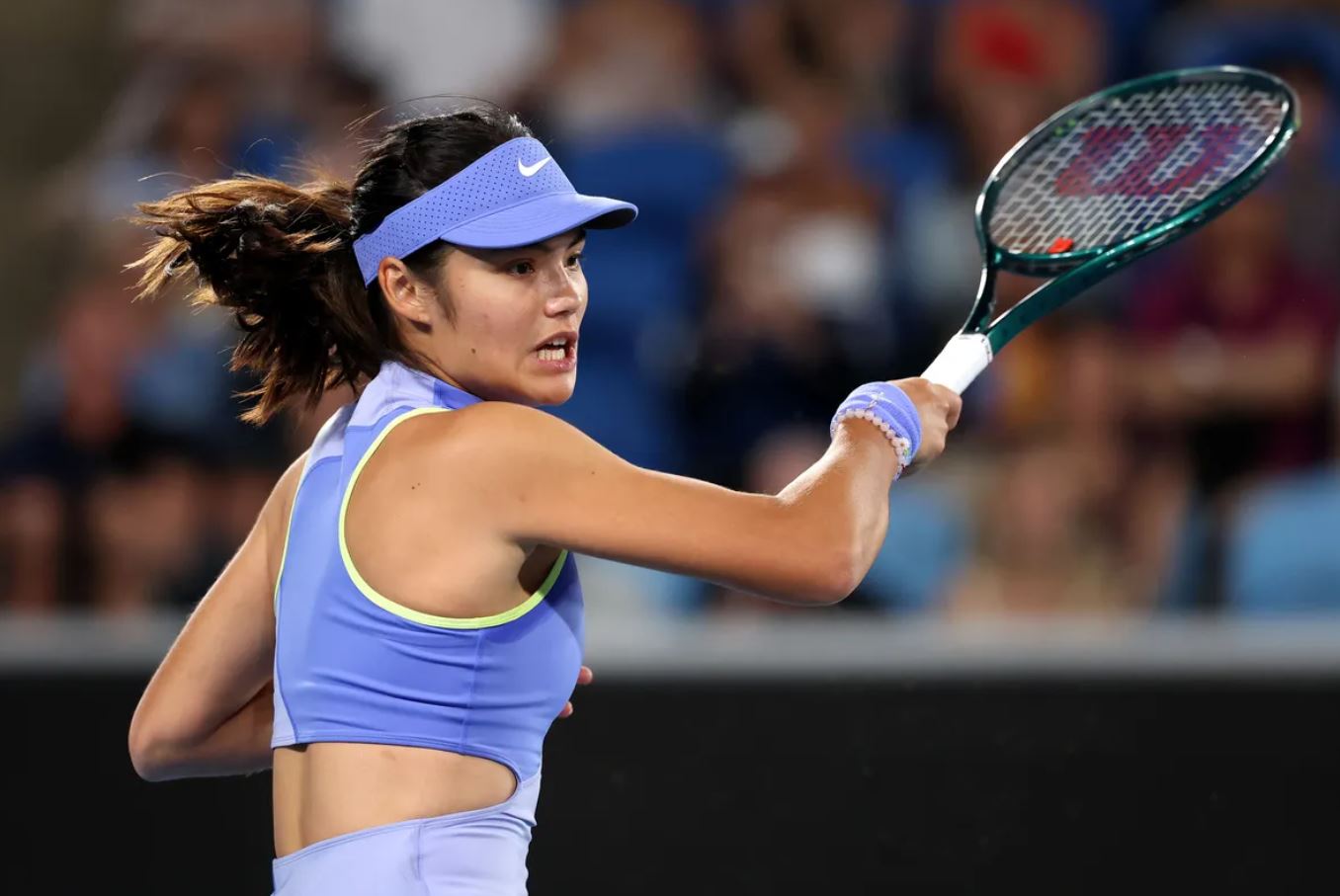
Under the high-intensity lights of the Margaret Court Arena, Emma Raducanu didn’t just win a tennis match. She rewrote the manual on Grand Slam preparation.
In a sport where players obsess over “rhythm,” “peak cycles,” and months of grueling preseason “blocks,” the British No. 1 has taken a different, more perilous path.
Following her first-round 6-4, 6-1 victory over Thailand’s Mananchaya Sawangkaew, Raducanu dropped a bombshell that left the press room in stunned silence.
The player who famously stormed to a US Open title as a qualifier has once again embraced the “unheard of,” revealing that she entered the first Major of 2026 with virtually no competitive practice under her belt.
“I came out here having not played any practice points,” Raducanu admitted, her voice carrying a mix of exhaustion and genuine pride. For a modern professional, this is the athletic equivalent of walking a tightrope without a net or even a rope.
In a world where peers like Iga Swiatek and Aryna Sabalenka spend weeks hitting thousands of balls to find their range, Raducanu’s buildup was a ghost story of injury management and gym sessions.
The catalyst for this unorthodox approach was a recurring foot issue that hampered the end of her 2025 season and forced a late withdrawal from her opening match at the United Cup against Naomi Osaka. While rumors swirled about her fitness levels, Raducanu was quietly calculating a different kind of comeback.
She eventually took to the court in Perth against Maria Sakkari, but as it turns out, that match wasn’t just a competitive debut but also her first real hit. “My match with Sakari was pretty much the first practice that I played which I mean is pretty unheard of,” she revealed.
The lack of a traditional “foundational base” was evident in the early stages of her Melbourne opener. Down an early break, Raducanu looked every bit the player who had spent more time on a treatment table than a baseline.
Her opponent, Sawangkaew, was playing with the freedom of a qualifier, dropping returns “very deep on the line” and serving with a precision that Raducanu confesssed was “better than I probably expected going onto the court.”
Yet, the magic of Raducanu has always been her ability to learn on the fly and to treat a Grand Slam match as a high-stakes classroom. As the first set progressed, the “sloppy errors” that plagued her recent quarter-final loss in Hobart began to vanish.
She stopped overthinking the “swing paths” and started trusting the instinct that made her a teenage icon. “I’m happy with the level and happy with the speed at how I’ve kind of found my feet on the match court,” she said, reflecting on a performance that saw her win 10 of the last 11 games.
“It gives me confidence that you know if I keep doing the right things and actually am able to put chunks of work in and good blocks of practice then uh I can improve a lot more.”
The victory is a testament to a specific brand of psychological resilience. Most players would crumble under the anxiety of knowing their preparation was incomplete. Raducanu, however, seems to thrive in the void. She spoke of her pride in having “only had you know two two weeks out here of playing and finding my feet,” turning what many would see as a disadvantage into a badge of honor.
As she moves into the second round to face a familiar junior rival in Anastasia Potapova, Raducanu is acutely aware that her body is still catching up to her ambitions.
She welcomed the tournament’s new scheduling, which grants her a crucial 48-hour window to recover from her late-night exploits. “I’m really happy to have two days especially playing so late,” she noted, acknowledging that for her, “the adrenaline is so high to switch off is very difficult.”