Carlos Alcaraz wins ugly, values mental grit over perfect Tennis
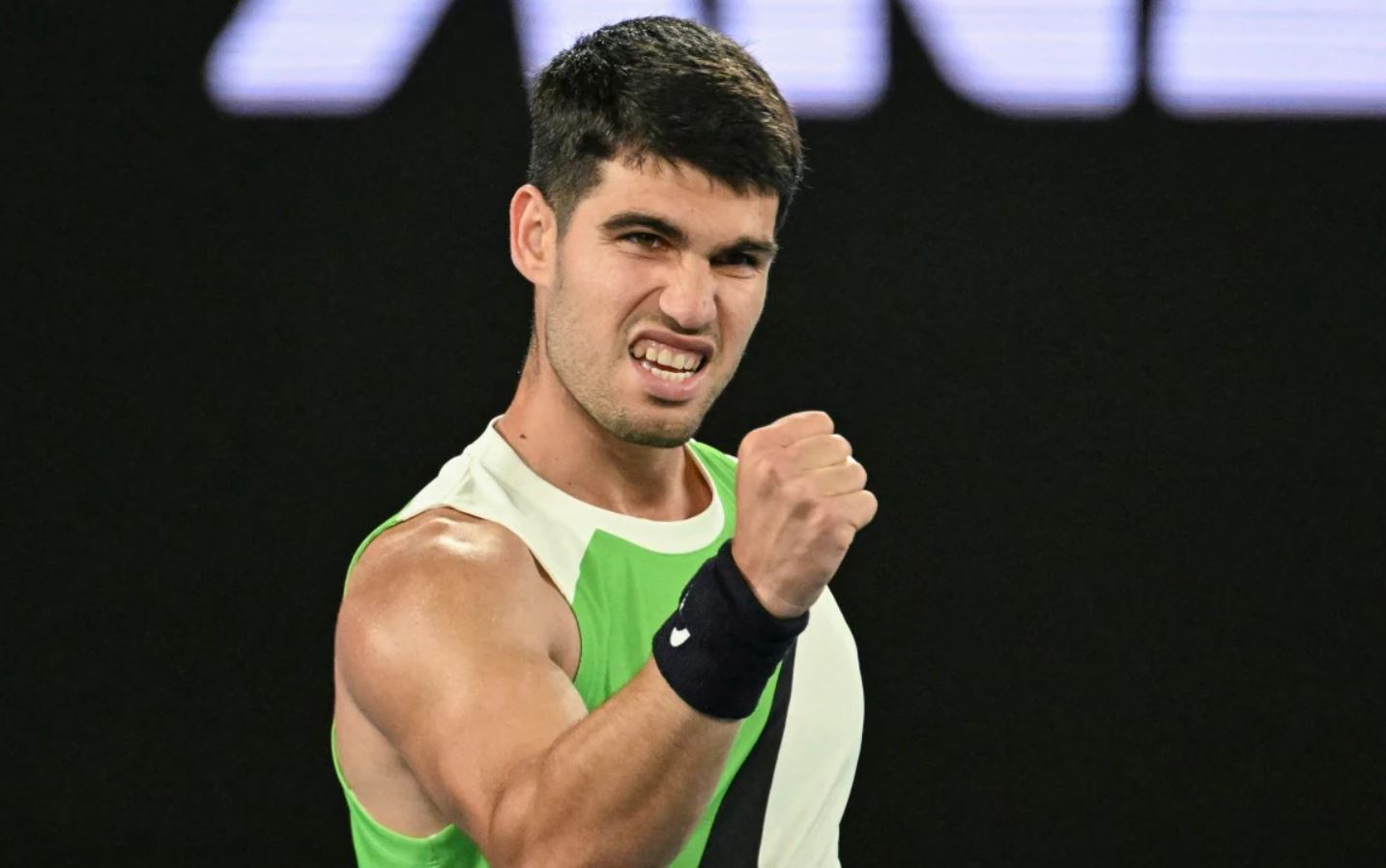
The sun had long since dipped below the horizon at Melbourne Park, leaving the neon glow of the Rod Laver Arena to illuminate a familiar scene. Carlos Alcaraz, the Spanish phenomenon whose game is often described in terms of explosive physics and impossible geometry, had just secured another victory.
On paper, it was a straightforward opening-round win. In reality, it was a gritty, sometimes frustrating exercise in problem-solving.
When Alcaraz walked into the press conference room, he didn’t lead with a highlight-reel shot or a statistical breakdown of his serve. Instead, the World No. 1 spoke about the internal architecture of his game.
The takeaway was clear. The most important development in Alcaraz’s 2026 campaign isn’t how hard he hits the ball, but how he handles the moments when the ball doesn’t go where he wants it to.
In an era where “perfection” is often the baseline for the elite, Alcaraz is leaning into the beauty of the struggle. During the match, a second-set surge from Aussie Adam Walton threatened to turn a routine evening into a marathon. Alcaraz felt the shift. He felt the momentum tugging at his sleeves.
“I am playing good tennis, but I lost focus a little bit in that game with myself, which made it more complicated,” Alcaraz admitted.
It was a strikingly honest admission. While the crowd saw a champion maintaining control, Alcaraz felt the “game with myself”—that invisible, psychological tug-of-war that destroys lesser players.
In the past, a lapse in focus might have led to a racquet toss or a downward spiral. Tonight, it was merely a data point to be managed.
This is the “Winning Ugly” philosophy, modernized for a player who is capable of the most beautiful tennis on the planet.
Alcaraz is learning that at the Grand Slam level, style points are secondary to survival. The second set became a dogfight because Walton found a rhythm that was, by Alcaraz’s own account, “a little unexpected”.
When asked what he was most satisfied with after the match, Alcaraz bypassed the technical metrics. He didn’t boast about his winners-to-unforced-error ratio. Instead, he pointed toward his emotional discipline.
“I’m happy because I think I did the things I had to do pretty well in terms of behaving well and keeping a good, positive mindset all the time,” Alcaraz explained. “That was one of my main goals coming into this match.”
For those who follow the tour closely, this is a significant pivot. The Alcaraz of two years ago was a creature of pure instinct, riding the highs of his own brilliance.
But the Alcaraz of 2026 is an athlete obsessed with his own “behavior” on court. He is recognizing that “keeping a good, positive mindset” is a skill that requires as much practice as a cross-court backhand.
It is a narrative of mental grit over aesthetic perfection. He was candid about the fact that his physical game wasn’t yet at its ceiling. “I hit the ball well, though it could be better,” he noted, almost dismissively.
For Alcaraz, the ball-striking is a variable that can fluctuate, but the mindset is a constant he refuses to compromise. This approach is what separates the great from the historic.
By prioritizing his “positive mindset all the time,” he creates a safety net for those days when the timing is off or the wind is swirling. He is building a version of himself that can win when he is playing at 70%, simply by out-persisting the man across the net.
The road ahead in Melbourne remains treacherous. The quarterfinals have historically been a “tricky” hurdle for the Spaniard, and he is the first to admit that his current level needs to rise. “I know I have a lot of things to improve in the next round if I want to go further,” he said.
However, if this opening press conference is any indication, Alcaraz isn’t worried about finding his rhythm. He knows the “good tennis” is there. What he’s truly focused on is the man in the mirror.