The evolution of a happy place for Gael Monfils
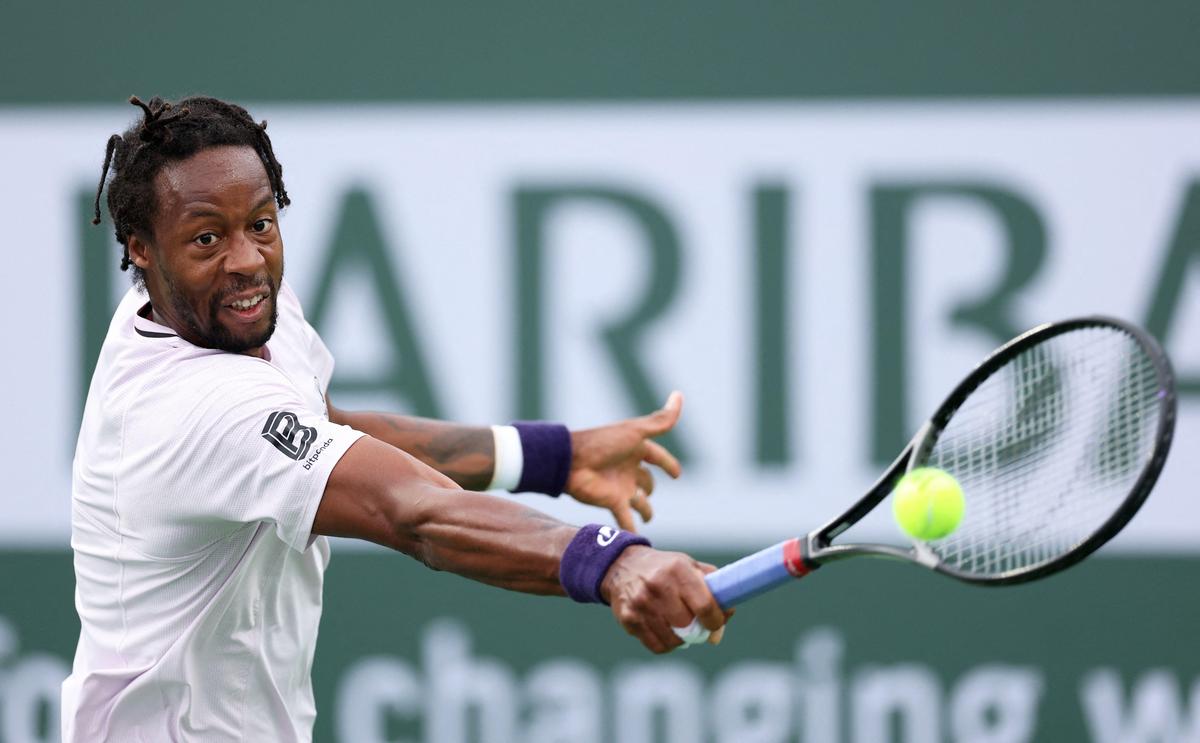
The desert sun was beginning its descent over the San Jacinto Mountains as Gael Monfils made his final walk toward the exit of Stadium 3.
The scoreboard at the BNP Paribas Open showed a narrow 6-7(5), 6-3, 6-4 defeat to World No. 9 Felix Auger-Aliassime, but the results in Indian Wells have long been secondary to the atmosphere “La Monf” creates.
As the crowd rose in a deafening, sustained standing ovation, the 39-year-old Frenchman paused, soaked it in, and offered a wave that felt more like a thank-you note than a goodbye.
For Monfils, Indian Wells has never been just another stop on the ATP Tour. It has been a living, breathing timeline of a career that has spanned over two decades.
In his final appearance in the Coachella Valley, the veteran reflected on a journey that began in 2005 — a year when he was the ATP Newcomer of the Year and the tennis world was just beginning to realize the scale of his athletic genius.
“It’s unbelievable tournament for me. I’m a little bit sad,” Monfils admitted shortly after the match.
“You know, normally not down, but a little bit sad that, as I say last time I came here, 2005, I had the chance to, for the first time, come with my mom, and, you know, as a kid, always wanted to play in big tournaments, big crowd, big venues, and this one was matching all my expectations from day one until now.”
The infrastructure in the desert has transformed since that first visit in 2005.
Stadium 2 didn’t exist as the architectural marvel it is today, and the site hadn’t yet earned the “Tennis Paradise” moniker bestowed upon it by Larry Ellison. Monfils has been a witness to every brick and every blade of grass added to the grounds.
“The infrastructure is just unbelievable. Could see the evolution now for two decades, and it’s been great,” he remarked. But the most significant evolution hasn’t been the concrete or the digital scoreboards; it has been the personal milestones Monfils marked within these gates.
He speaks of his tenure in Indian Wells in chapters. There was the teenage Monfils, arriving with the boundless energy of youth and a team that felt like a traveling party.
“Of course when I was super young, with friends, a little bit in the way with heavy team, to walk out,” he recalled with a smile. Then came the middle years, the prime of a top-10 stalwart who reached the quarterfinals here in 2016 and 2019, battling through injuries and the relentless era of the “Big Three.”
Finally, there is the Monfils we see today. A father and a statesman of the game.
This year, the player who once arrived with his mother returned with his daughter, Skai, and his wife, Elina Svitolina. The desert has become a family tradition, a place where the frenetic pace of the tour slows down enough for him to find balance.
“Then family, then family with my daughter and parents. You know, for me was always a happy place, a place that, you know, I could grow my own self, as well. I always sit here in peace,” he said.
That sense of peace was evident even in defeat.
Facing an opponent 14 years his junior in Auger-Aliassime, Monfils showed flashes of the vintage “sliderman” defense that made him a household name. He fought until the final ball, not out of a desperate need for ranking points, but because of a fundamental respect for the sport.
“I was super happy, you know, that I could get this invitation, because I think it’s the most, I mean, it’s the tournament where I played the most, and I think it’s for a reason, because here I always felt good,” Monfils added.