The Novak Djokovic method and the architecture of modern dominance
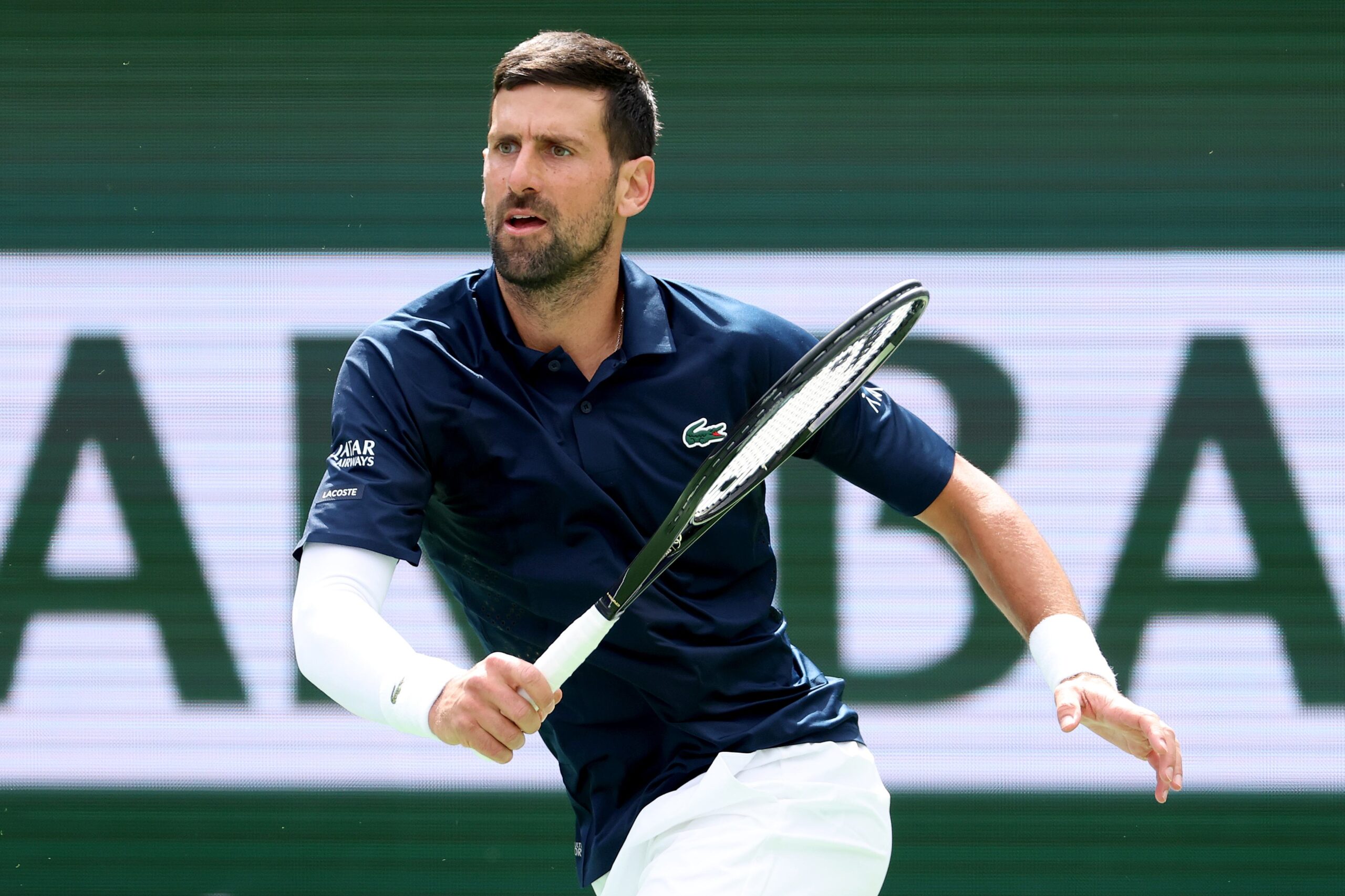
The fluorescent lights of the Indian Wells press room hum with a quiet tension that usually follows a Novak Djokovic escape act.
Outside, the California desert air is cooling, but inside, the World No. 3 is just beginning to heat up. Not with frustration, but with a clinical breakdown of what it actually takes to survive the sport’s most volatile moments.
Fresh off a grueling 6-4, 1-6, 6-4 victory over Aleksandar Kovacevic, a match that saw the legendary returner neutralized by a barrage of aces, Djokovic didn’t just talk about the win. He dismantled the very concept of “Tennis IQ,” reframing it from a mystical gift into a rigid, 24-hour architectural project.
For Djokovic, the game is no longer won merely between the lines. It is won in the diligent, holistic, multi-disciplinary approach that defines his life long before the first coin toss.
In the second set against Kovacevic, the script flipped. The young American of Serbian descent was striking the ball great, leaving Djokovic searching for a rhythm that wouldn’t come.
Most players, when faced with an opponent playing lights-out tennis, tighten up. They pray for their opponent’s level to drop or for their own “Plan A” to suddenly click back into gear.
Djokovic doesn’t pray. He adapts.
“When you’re facing a wall mentally, so to say, when you’re not particularly happy with the execution of your plan A or plan B, you’ve got to have plan C, D, E, F, whatever,” Djokovic explained to a captivated room of reporters. “You have to adapt to every player, surface, conditions.”
This is the “Plan G” mentality — a commitment to an infinite alphabet of solutions. It’s the reason why, even on a day when he admitted he couldn’t really return at all against Kovacevic’s serving display, he was the one walking to the net as the winner.
He waited for the crack, the tiny moment in the tenth game of the third set where the pressure shifted, and he used his arsenal of shots to find the narrowest of corridors to victory.
To the casual observer, Tennis IQ is that split-second intuition to hit a drop shot or a disguised lob. To Djokovic, that’s just the tip of the iceberg. The real intelligence, he argues, is the work done when the cameras are off.
“In my case, the way I see my evolution in my game and the other guys… is what you do before you get to the official match,” he said. “Does everything revolve around tennis? Do you nurture the mindset of trying to improve and get better, and not only rely on your strengths and kind of pray that your weaknesses are not exposed, but rather try and improve the game as you go along, because everyone else does it.”
It is a sobering reminder of the “Total Tennis” philosophy. In Djokovic’s world, there is no such thing as an off-switch. Every meal, every stretch, and every hour of sleep is a brick in the wall of his consistency.
He acknowledges that some players are just more gifted than others, possessing a natural flair that can get them out of trouble in a single match. But talent is a sprint; Djokovic is interested in the marathon.
The victory over Kovacevic was a microcosm of this long-lasting career philosophy. Faced with a rare one-handed backhand and a serving performance that defied Kovacevic’s height, Djokovic had to dig into a multi-disciplinary toolkit built over two decades.
He, in addition to outplaying Kovacevic, also out-prepared him. While the youngster relied on great ball-striking, the veteran relied on a lifestyle of finding a way through.
As the tour moves forward, Djokovic’s message to the next generation remains clear. If you aren’t evolving, you’re retreating. The IQ required to stay at the summit of the ATP rankings isn’t something you’re born with. It’s something you build, one diligent day at a time.
“It takes years of development,” he noted with the calm of a man who has already put in the time. And if the Indian Wells crowd learned anything today, it’s that as long as there is a Plan Z left in his bag, the Djokovic era is nowhere near its end.