Daniil Medvedev and the dark arts of the hindrance rule
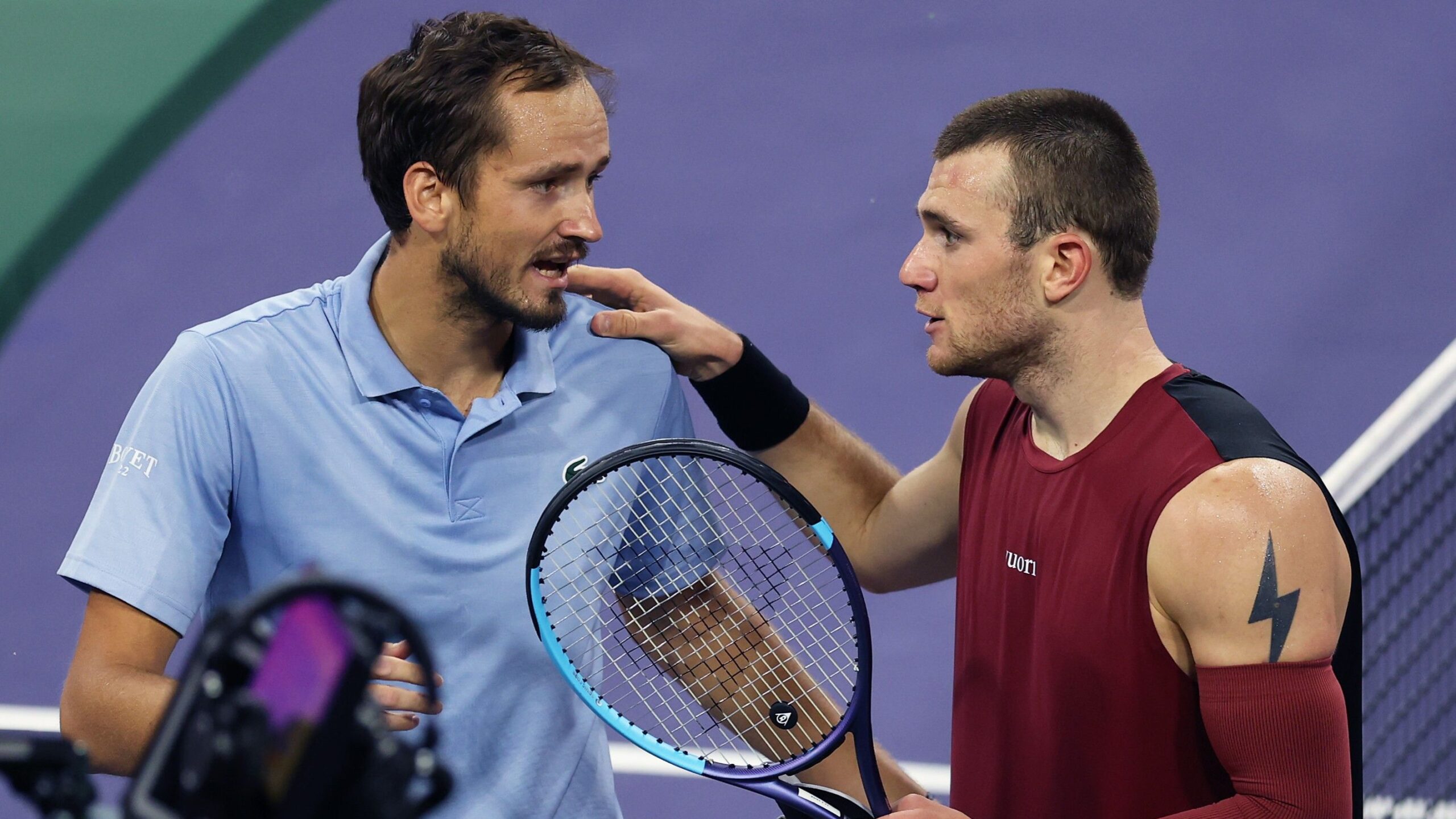
In the high-stakes theater of Indian Wells, where the desert sun beats down with as much intensity as the expectations of the crowd, matches are often decided by inches.
But on Thursday evening, the quarterfinal clash between Daniil Medvedev and Jack Draper turned on something far more intangible. A flicker of movement, a moment of hesitation, and the cold, unblinking eye of the video review.
The score was locked at 5-all in the second set, 0-15 on Draper’s serve. The British defending champion, still fueled by the adrenaline of his monumental win over Novak Djokovic less than 24 hours prior, appeared to be steadying the ship.
Then, a bizarre sequence unfolded.
Believing a Medvedev return had drifted long, Draper briefly raised his arms in a “what happened?” gesture mid-rally. The point continued, and Medvedev eventually dumped a ball into the net.
The stadium expected a 15-all scoreline. Instead, they got a debate that would define the afternoon.
Medvedev approached chair umpire Aurélie Tourte, not with a shout, but with a question. He wanted to know if he should have stopped the point immediately or if the new video review system could retroactively address what he felt was a clear hindrance.
“I said to the umpire, like, What should I do? Should I do it next time straightaway?” Medvedev recounted later in the press room. “And she goes, like, If you want, you can video review. I said, Okay, video review.”
The review was conclusive in its facts but divisive in its interpretation.
Draper had moved. The question was whether that movement had truly cost Medvedev the point. Tourte ruled in favor of the Russian. The crowd, ever-protective of the underdog, erupted in a chorus of boos that followed Medvedev until the final handshake.
For Medvedev, a man who has often played the role of the tour’s resident philosopher-king of controversy, the moment was less about gamesmanship and more about the strange, shifting mechanics of modern tennis rules. He didn’t hide behind a mask of certainty.
“Was I distracted big time? No. Was I distracted a bit? Yes. Is it enough to win the point? I don’t know,” he admitted with the kind of blunt honesty that has become his trademark. “I think if you look at my first forehand, I do, after this happens, I could have gone for more. I was kind of tiny bit distracted.”
Draper, for his part, handled the fallout with remarkable poise, acknowledging the technicality while questioning the weight of it. He told the media that while he understood he made a “slight thing” with his hands, he didn’t believe it was enough to truly disrupt a player of Medvedev’s caliber.
The incident left a lingering question hanging over the tournament. Is it morally right to claim a point when the distraction is marginal? Medvedev’s response was a window into the psyche of a professional who has spent years on the receiving end of tennis’s cruelest bounces.
“Do I feel good about it? Not really. But I also don’t feel like I cheated or something,” Medvedev said. “I got a bit distracted. I let it go, I let the referee decide. I had a lot of calls against me in my life, and I usually don’t handle them well. To get one on my side, I guess feels good as well.”
The match ended 6-1, 7-5, but the scoreline feels like a secondary detail.
The “moral victory” of the afternoon belonged to the rules. Or perhaps to the player who knew how to use them most effectively. Medvedev moved on to the semifinals, but he did so knowing that in the eyes of the California crowd, he had once again embraced the role of the “antihero.”
“I think we have a great relationship,” Medvedev noted regarding Draper. “I don’t think one incident like this could make the outcome, especially, as again, I told him straightaway, if she thinks it’s not enough, 15-All, we go on. If she thinks it’s enough, well, then, it’s Love-30, I’m sorry.”