Alexandra Eala and the powerful perspective of a spoonful of gratitude
There is a specific kind of quiet that descends upon a press room after a significant upset.
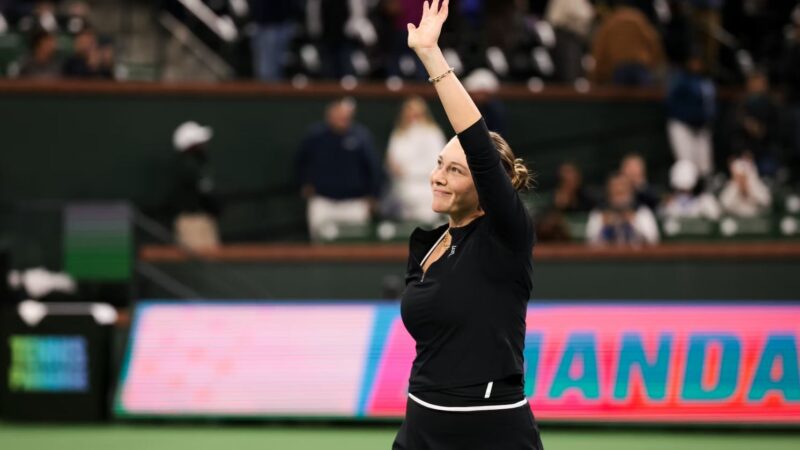
When 20-year-old Alexandra Eala walked into the media center at the Hard Rock Stadium on Saturday night, she carried the air of someone who had just completed a shift, not just a career-defining win.
Having just dispatched the gritty veteran Magda Linette 6-3, 7-6(2) to reach the fourth round of the Miami Open for the second consecutive year, Eala was poised, professional, and — most notably — grounded.
For the World No. 29, the turquoise courts of Miami have become a sanctuary of success. It was here twelve months ago that she announced herself to the elite tier of the WTA, toppling Grand Slam champions and surging into the public consciousness.
But as the Filipino trailblazer sat before the microphones, the conversation drifted away from cross-court forehands and toward a phrase that has become her personal mantra: a “spoonful of gratitude.”
In a sport often defined by the “me-versus-the-world” mentality, Eala’s perspective is an anomaly. When asked where this deep-seated sense of appreciation originates, her answer bypassed the usual platitudes of athlete interviews.
“I think the fact I recognize that I’m also blessed to be living my life, or the life that I live,” Eala shared. She is quick to defend the effort required to reach these heights, adding with a firm smile, “Of course, I’ve earned it. I’ve definitely earned it. I’ve put in the work. That’s not to be questioned.”
Yet, for Eala, earning a place at the table doesn’t mean forgetting those who don’t have a seat. Growing up in the Philippines, a nation where the divide between the sporting elite and the everyday struggle is often stark, has left an indelible mark on her psyche.
“I think it’s so important to be grateful for what you have,” she explained. “I’ve witnessed poverty in surroundings, in my surroundings. I don’t take for granted anything, especially family and my team and just the opportunities I’m able to have. So that’s why I make it a point to always be grateful.”
This isn’t just post-match humility; it is a competitive edge. On court, that gratitude manifests as resilience. In the second set against Linette, when the Pole upped her aggression and forced a high-stakes tiebreak, Eala didn’t succumb to the suffocating pressure of the moment. Instead, she leaned into the “privilege” of the struggle.
“I think I just told myself to be brave, do whatever I could,” Eala said of the tiebreak, which she dominated 7-2. “I can’t control how she was playing. She I think upped her game in the second, so… I tried to go for my shots, and they were effective luckily.”
That bravery is easier to summon when the stakes of a tennis match are weighed against the realities she has seen off the court. By acknowledging the “blessing” of her career, the fear of losing seems to diminish, replaced by a resolve to honor the opportunity.
It is a philosophy that has served her well during a week in Miami plagued by unpredictable weather and grueling delays. While other players might vent frustration at the South Florida humidity and rain, Eala remains the pragmatist.
“We can’t tell the future. We do our best to handle what we can,” she noted regarding the scheduling chaos. “I think generally we try to stay warm, always be alert and on our feet.”
As she prepares to face World No. 14 Karolina Muchova in the Round of 16 — a player she admits to having watched with awe from the stands only a few years ago — Eala isn’t overawed by the occasion. To her, Muchova is another “test” and another reason to be thankful for the path she has carved.