“Can I pass?” Aryna Sabalenka stays silent on prize money demands
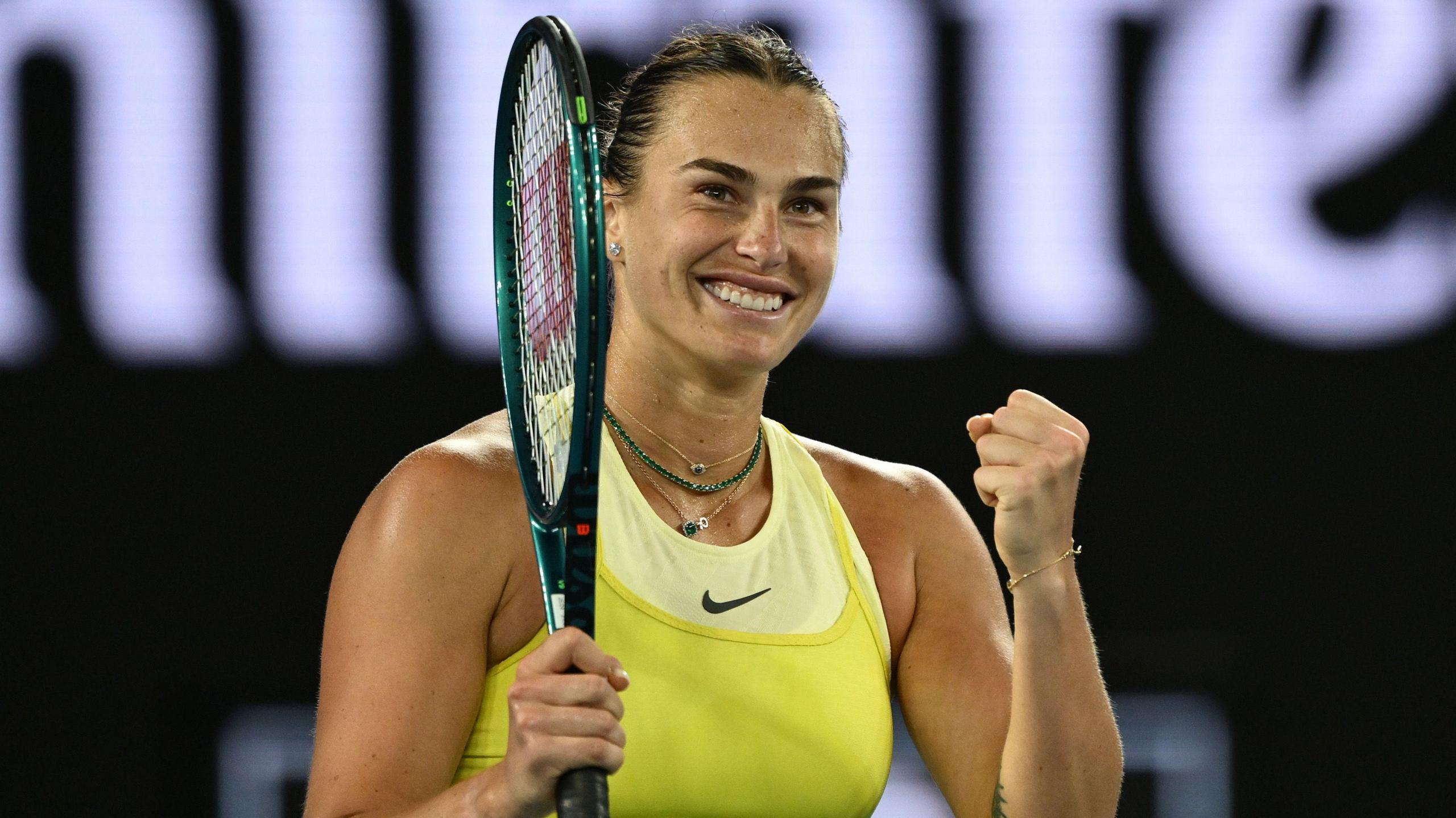
The bright lights of the Australian Open interview room usually catch the glint of the Daphne Akhurst Memorial Cup or the sweat of a hard-earned practice session. On Saturday, however, they caught something rarer. A calculated silence from the World Number 1.
Aryna Sabalenka walked into her pre-tournament press conference with the breezy confidence of a woman who has reached the final in each of her last three trips to Melbourne.
She joked about her “terrible” reading habits and beamed when discussing her recent appearance on The Tonight Show Starring Jimmy Fallon. But the atmosphere shifted when the conversation turned from late-night television to the gritty politics of professional tennis.
For months, Sabalenka has been one of the most prominent voices in a growing movement of players lobbying Grand Slams for better prize money distribution, improved welfare benefits, and a more significant seat at the decision-making table.
However, when asked how she felt the Australian Open had responded to these demands, Sabalenka was initially diplomatic.
“I think we always can do better,” she said, her voice steady. “But I think all of the slams they trying to work together with us and come to conclusion and I hope one day we’ll we’ll get to happy place for everyone.”
It was the kind of answer designed to satisfy without inciting. It acknowledged the friction while maintaining a veneer of professional optimism.
However, in the world of sports journalism, “doing better” is a phrase that begs for a metric. When pushed to define exactly what that improvement looks like and what specifically the Australian Open could do to reach that “happy place”, the top seed hit a sudden, firm baseline.
“Um, I mean, can I pass? Next question,” Sabalenka said with a tight smile.
In that five-second exchange, the “Brand Sabalenka” she had spent the earlier part of the conference discussing met the reality of the “Player Sabalenka.”
Earlier in the session, she had spoken eloquently about her desire to be “something bigger than just a tennis player” and an “example of a great athlete who can balance things around.”
But when it came to the specifics of the labor struggle currently simmering beneath the surface of the WTA and ATP tours, the shutters came down. This “pass” was not merely a refusal to answer, it was a symptom of the precarious position top-tier players inhabit.
Sabalenka is currently the gold standard of consistency, noting that she has reached the quarterfinals or better in every major since 2022. “I’m just taking one step at the time and I’m always trying to stay in the present,” she explained.
Yet, staying in the present becomes difficult when you are the face of a movement seeking to change the future. The players are asking for a larger slice of the massive revenue Grand Slams generate, arguing that the wealth doesn’t trickle down far enough to support those outside the top 50.
As a global star, Sabalenka’s words carry the weight of a sledgehammer. By choosing not to swing that hammer in the press room, she highlighted the complexity of the ongoing negotiations.
The silence could suggest that the conversations happening behind closed doors are perhaps more fraught than the public “happy place” comment would suggest.
While she noted that “all of the slams they trying to work together with us,” the refusal to name a single specific area for improvement speaks to a strategic retreat.
As Sabalenka left the room to continue her final preparations to reclaim the crown she lost to Madison Keys a year ago, the takeaway was clear. She is ready to dominate on the court, and she is ready to build a global brand off it. But when it comes to the “concessions” she mentioned, the world will have to wait.