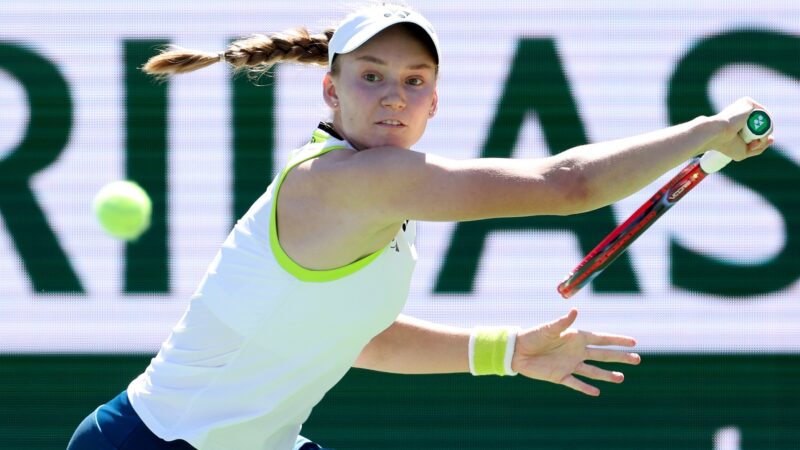
Elena Rybakina conquers first round nerves and Melbourne heat
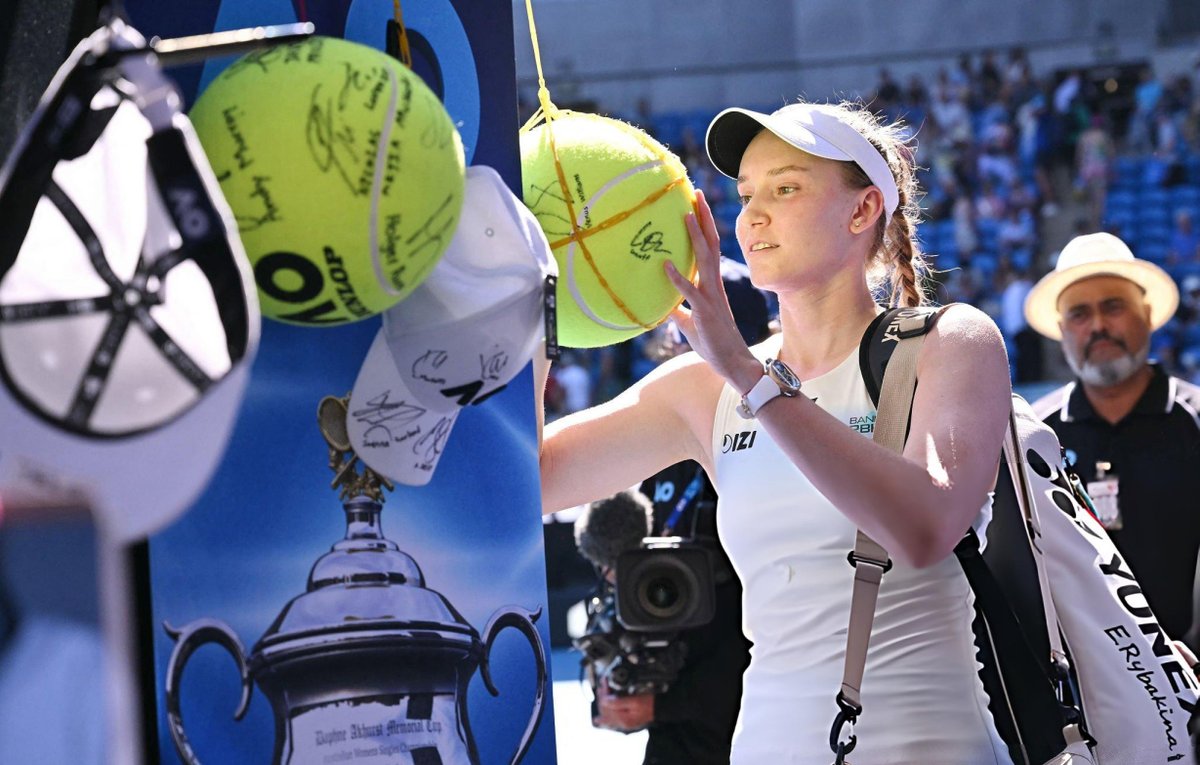
The bright blue hardcourts of Melbourne Park have always been kind to Elena Rybakina. On paper, the 2023 finalist and former Wimbledon champion possesses a record that suggests total atmospheric comfort in the southern hemisphere.
To the casual observer watching from the stands of Rod Laver Arena, she is the “Ice Queen” — a figure of preternatural calm, a six-foot-tall metronome of power who strikes the ball with a clinical, almost detached precision.
But as Rybakina sat down for her first press conference of the Australian Open 2026, the facade of effortless dominance fell away.
Despite maintaining her flawless streak of never losing an opening-round match in Melbourne, the World No. 5 pulled back the curtain on a psychological struggle that haunts even the game’s elite.
The weight of expectation does not get lighter with experience. If anything, the “long wait” to finally step onto the match court only intensifies the internal noise.
“I think I waited quite long, you know, to to finally play here,” Rybakina admitted, reflecting on the agonizing lead-up to the year’s first Grand Slam.
For a player of her caliber, the week preceding a Major is a paradox of activity and stillness. While the practice courts are a hive of technical fine-tuning, the mental space is filled with a mounting tension that no amount of cross-court drills can fully extinguish.
The nerves Rybakina describes are not merely a result of the occasion, but of the volatile environment that defines the Australian summer. Melbourne is famous for its “four seasons in one day” climate, and this year, the transition was particularly jarring.
“I feel like also the conditions, the week before was a little bit colder, now it’s quite hot, so you need to adapt,” Rybakina explained. In the world of high-stakes tennis, heat isn’t just a physical hurdle; it changes the physics of the sport itself. “The balls are flying a lot,” she noted, describing the hair-trigger sensitivity required to keep her flat, powerful groundstrokes within the lines when the mercury rises.
This environmental shift creates a mental friction. When a player is already battling the internal “anticipation of a Grand Slam,” having to recalibrate their entire physical rhythm due to a heatwave can be the breaking point.
Yet, in a display of the unique perspective that has kept her at the top of the rankings, Rybakina revealed that the start of the tournament actually brings a strange sense of relief.
“Now when you’re in the tournament I feel like it’s mentally probably a little bit easier,” she said. It is a sentiment shared by many top-tier athletes.
The anxiety of the unknown is far worse than the reality of the battle. Once the first ball is tossed, the abstract “what-ifs” are replaced by concrete problems to solve — a serve that needs more kick, a return that needs better positioning, or a sun-drenched court that demands a change in tactics.
The match itself was far from the “perfect match” that fans expect from a top seed.
Rybakina was candid about her struggles on the return of serve, noting that it took her far too long to find her rhythm against an opponent who was mixing speeds and angles effectively. “For me it took too long to to adjust I would say,” she confessed.
However, her victory was a testament to the “positives” she managed to cling to while the nerves were still simmering. While her return game faltered, her serve, which is a weapon that had been inconsistently firing in previous weeks, became her sanctuary.
“I’m happy with the way I served since the previous tournament it was not the case,” she said, highlighting the technical work she and her team put in during the days leading up to the event.
Rybakina’s admission is a vital reminder that victory at the highest level is rarely about the absence of fear. Instead, it is about the management of it. Even with an undefeated first-round record on the line, Rybakina had to fight through a “mentally tough” start to ensure she reached the second round.
“I think first matches are always tough also to get to start the the tournament,” she summarized, already looking toward the next challenge.
As she prepares to face Varvara Gracheva in the next round, the “Ice Queen” will likely look just as stoic as ever. But now we know that beneath the surface, there is a player who feels every bit of the heat, every flight of the ball, and every pulse of the Melbourne crowd.