How Sebastian Korda found his identity in a dark hole and stunned the World No. 1
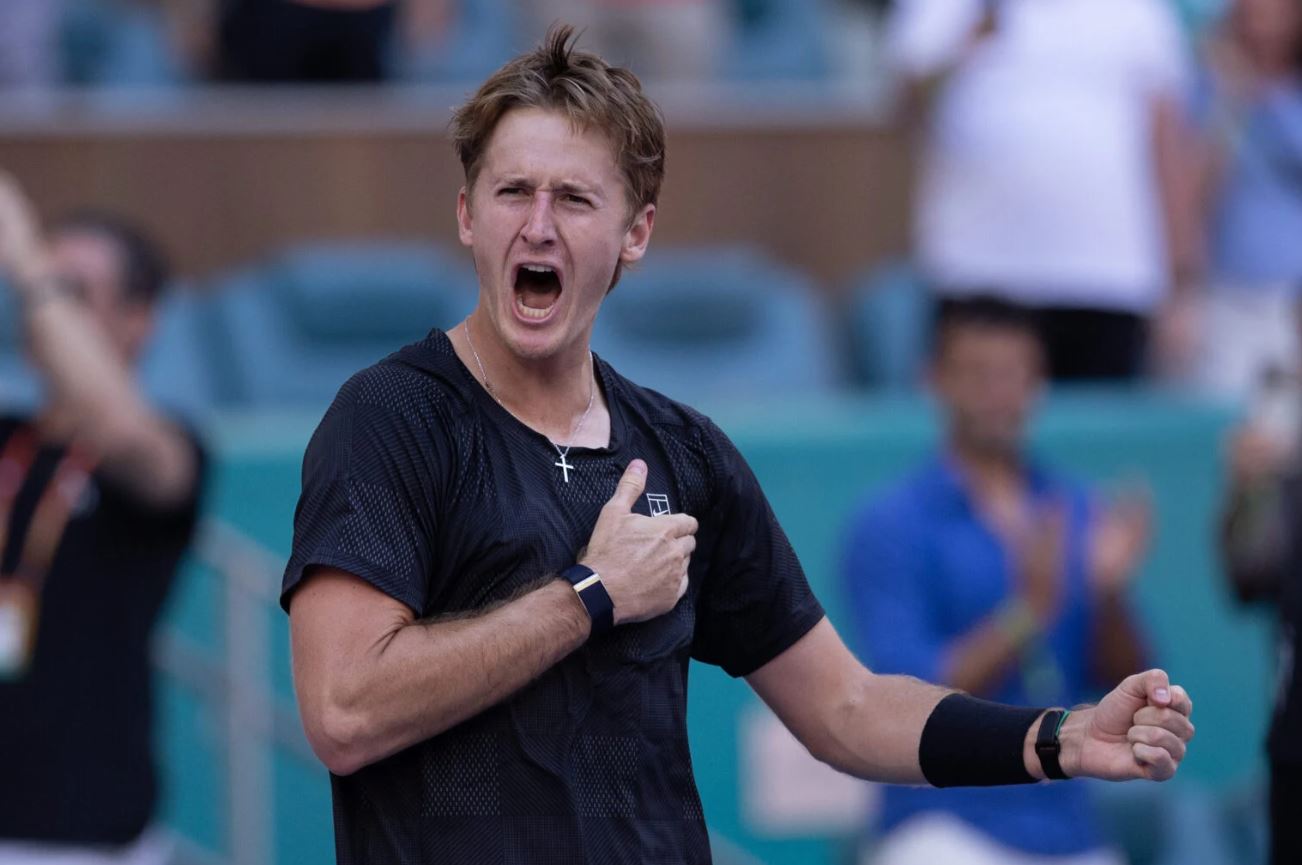
Under the humid, electric sky of the Hard Rock Stadium on Sunday afternoon, Sebastian Korda didn’t just defeat the world’s top-ranked player. He didn’t just derail Carlos Alcaraz’s bid for a Sunshine Double or provide the highlight of the 2026 Miami Open.
He finally answered a question that had been haunting him through two years of injury-riddled dark holes and agonizing setbacks. He figured out who he was.
The box score will tell you Korda won 6-3, 5-7, 6-4. It will show he withstood a furious second-set comeback from a Spaniard who, just weeks ago in Melbourne, became the youngest man to complete a career Grand Slam.
But the real story of Korda’s resurgence traces back to a quiet, unexpected conversation in Dallas last month with a man who knows a thing or two about on-court identity. John McEnroe.
“In Dallas, I was actually super fortunate,” Korda told reporters following his win. “John McEnroe was playing an exho there. He took a couple minutes out of his day just to talk to me. That’s one of the things we really talked about, finding my identity on the court.”
For Korda, that identity had been fractured. Since reaching a career-high of No. 15 in 2024, the American’s journey has been defined more by trainers and MRI machines than by trophies.
From a debilitating shin stress fracture that left him on crutches to a lower back injury that forced a retirement at last year’s US Open, the 25-year-old admitted he had drifted far from the confident ball-striker the world expected him to be.
“I’d been injured for so long, missed so many months, got down a really dark hole,” Korda admitted with startling candor. “Those were important weeks for me to just kind of figure myself out. Obviously, I wasn’t playing the tennis I’m playing today. Especially mentally, I didn’t feel great.”
The soul searching McEnroe prescribed was a tactical and emotional blueprint. According to Korda, the legend’s advice was simple yet profound. “One of the things he said was, ‘You got to go soul searching, you got to figure out who you are, you got to figure out why you play tennis, why you love tennis,'” Korda shared. “I think that’s been a massive key for me. Grateful that he took the time out of his day to do that.”
That clarity was on full display against Alcaraz. When Korda served for the match at 5-4 in the second set and Alcaraz, playing with the presence Korda says only a World No. 1 possesses, reeled off five straight games to force a decider, the old Korda might have folded. Instead, the 2026 version chortled.
“I was kind of chuckling at myself at the changeover when I lost that 5-3 game in the third,” Korda said. “I was like, ‘Here we go again.’ I learned from it. I knew I went out wide on the first serve in the second set. Wasn’t going to go there again.”
This newfound resilience is part of a deliberate re-entry plan.
While Alcaraz was hoisting the trophy in Australia this January, Korda was toiling in the stressful environments of lower-level tournaments, including a run to the final in San Diego. He sought out the nasty moments of match play to harden a psyche that had grown weary of the sidelines.
“It gave me a little bit of a boost of confidence to throw myself back in those stressful situations,” he explained. “If I didn’t play San Diego, I don’t think I’d be sitting here right now.”
Working alongside new coach Ryan Harrison, Korda has embraced a philosophy of emotional regulation.
They do the work, they talk it over, and then they try to be normal. It is a grounded approach for a player who belongs to one of the most successful sporting families in history, yet has had to find a path that is uniquely his own.
As he walked off the court in Miami, the crowd, which had been vocally backing Alcaraz, roared in respect for the underdog. Korda, ever the student of the game’s atmosphere, didn’t mind the noise. In fact, he fed on it.
“I love playing in like a hostile environment,” he said with a smile. “Luckily I’ve played some of my best tennis when the crowd’s against you.”