Karolina Muchova silences doubt with long awaited Doha triumph
The desert light in Doha has a way of flattening everything — the skyline, the shadows, even expectations.
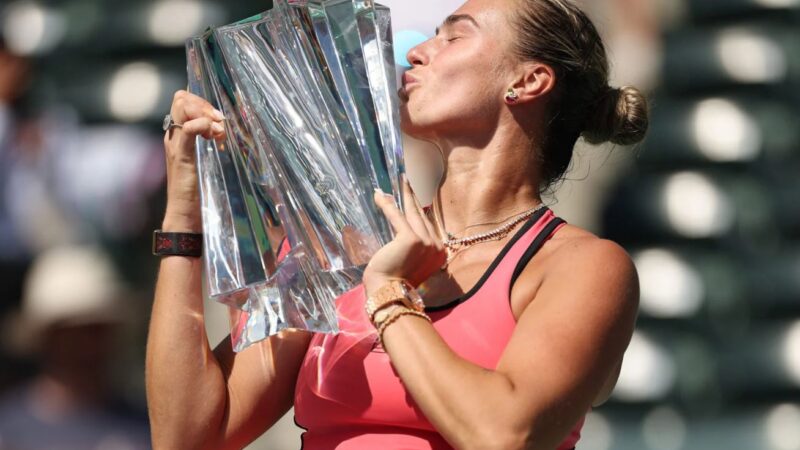
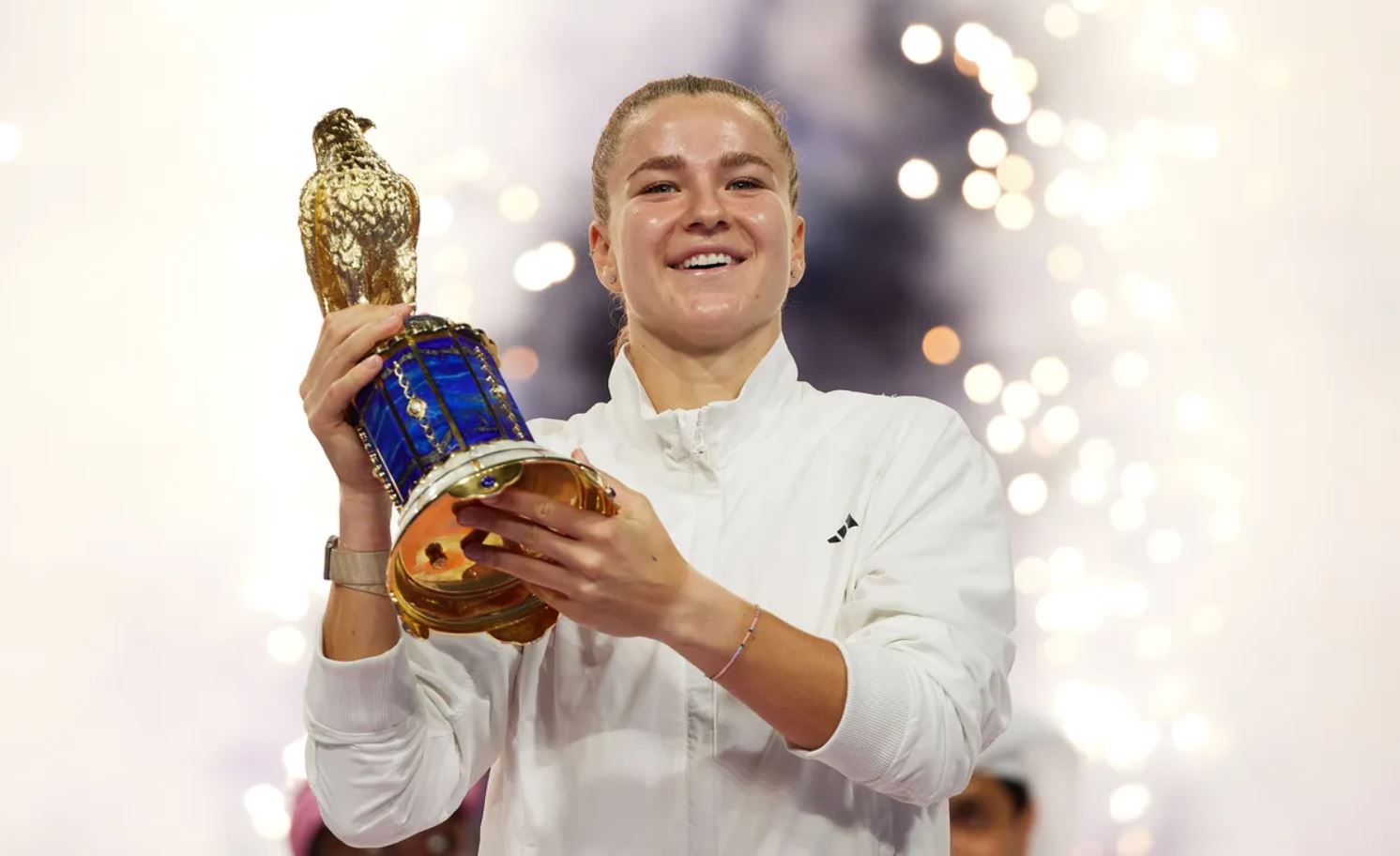
But on Saturday night at the Qatar TotalEnergies Open, nothing about Karolina Muchova felt flat. She stood in the center of the court, silverware finally in her hands again, and for a moment the years between titles seemed to collapse into something manageable, almost tender.
It had been 2019 — Seoul, to be precise — when she last lifted a trophy.
Since then, the Czech artist of angles and improvisation had built a resume full of deep runs and what-ifs. Finals at Roland Garros, back-to-back US Open semifinals, near-misses against the very best. Yet the column that tracks titles stubbornly refused to move.
Until now.
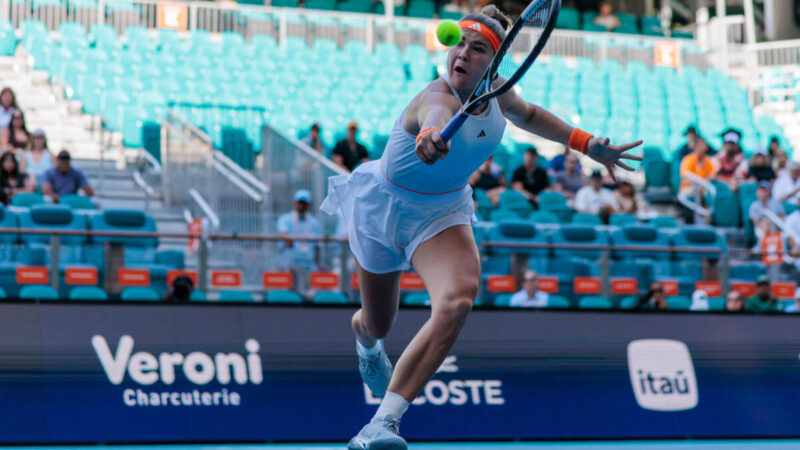
Muchova defeated 19-year-old Victoria Mboko 6-4, 7-5 in one hour and 34 minutes to claim her first WTA 1000 crown and only the second title of her career. The scoreline suggests control. The match itself was tighter, threaded with tension and the kind of small margins that separate belief from doubt.
“It’s been a while since I won a tournament,” Muchova said during the trophy presentation. “So it’s just nice to get that feeling again. To be reminded of that victory feeling here in Doha, it’s incredible.”
If that sounded like relief, it’s because it was.
Only two active players have waited longer between their first and second tour-level titles than Muchova — Sorana Cirstea and Viktorija Golubic. In that stretch, Muchova lost four finals, each to elite opposition: Iga Swiatek, Coco Gauff, Zheng Qinwen. The company was flattering; the outcomes were not.
“I would say I nearly forgot the winning feeling, because it’s been really quite a while,” she confessed afterward. “To get reminded of it, actually, I was pretty nervous before the match. I’m like, ‘Okay, how am I going to deal with it, how am I going to manage it.’ And then when you actually make it, and I dealt with that pressure I think very good in today’s match, I was just relieved, and the intensity of the feeling of winning, it’s just so nice.”
The final unfolded like a study in patience.
The first six games passed without separation. Then, at 3-all, Muchova nudged the door open, breaking for 4-3 with the kind of disguised depth that has long made her dangerous on big stages. She nearly snatched the set on Mboko’s serve, was denied, and calmly served it out in the next game anyway.
The second set wobbled.
Mboko — fearless, elastic, already swinging like she belonged — erased three break points at 2-all with a backhand winner, a smash and an ace. She surged ahead 4-2 after breaking Muchova for the first time all night. For a flicker of time, it felt like the teenager’s legs might outrun the script.
But this was the week Muchova stopped blinking.
She broke back immediately, held at love, and then carved out the decisive break at 6-5. When she stepped to the line to serve for the championship, there was no visible tremor. Two sets, done.
The numbers tell a story of quiet authority. Muchova won roughly 80 percent of her first-serve points, surrendering just eight across the match.
She captured more than 41 percent of return points and converted three of her break chances. Mboko generated only one break point and took it. But that was the lone crack in an otherwise composed performance. The final points tally, 73 to 61, underscored both the edge and the narrowness of it all.
For Mboko, who will rise into the Top 10 for the first time, becoming just the fourth Canadian woman to do so after Carling Bassett Seguso, Bianca Andreescu and Eugenie Bouchard. The loss was framed as progress, not heartbreak.
“Making it to the finals is generally a positive thing, it’s never a negative,” she said. “She played really great tennis. Playing Top 10 players, my first time here too, I didn’t have many expectations (for) myself.
“She was just sharper on the most important points. She was able to stay solid in those points where I think I was missing a lot more than her. She had some really great shots that put me on defense.”
Sharpened on the important points — that’s the phrase that lingers. For years, Muchova has dazzled with improvisation: the feathered drop shots, the change-of-pace slices, the geometry that bends rallies out of shape. What she produced in Doha was something sturdier. Less fireworks, more steel.
Her ranking will climb to No. 11, nudging close to her career-high of No. 8. She won’t have long to linger; Dubai waits. Tennis rarely grants extended celebrations.
“In tennis everything goes so fast,” Muchova said. “I think sometimes we forget to stop and reflect on the good weeks, or small wins, big wins. My next tournament starts tomorrow! So, it’s really tough. But I would just like to stop for a little bit and enjoy it with my team, and just go somewhere tonight with them and have a good time and maybe reflect a little more.”
Then she grinned, the tension dissolving.
“We said with the team that after we are done here that we are going to get burgers together. So I’m starving,” she said with a laugh, “and I kind of look forward to go with them and have a burger and celebrate a little bit.”
After seven years of waiting, a WTA 1000 trophy and a late-night burger in Doha feel perfectly earned.