The human strategy behind Amanda Anisimova’s title charge
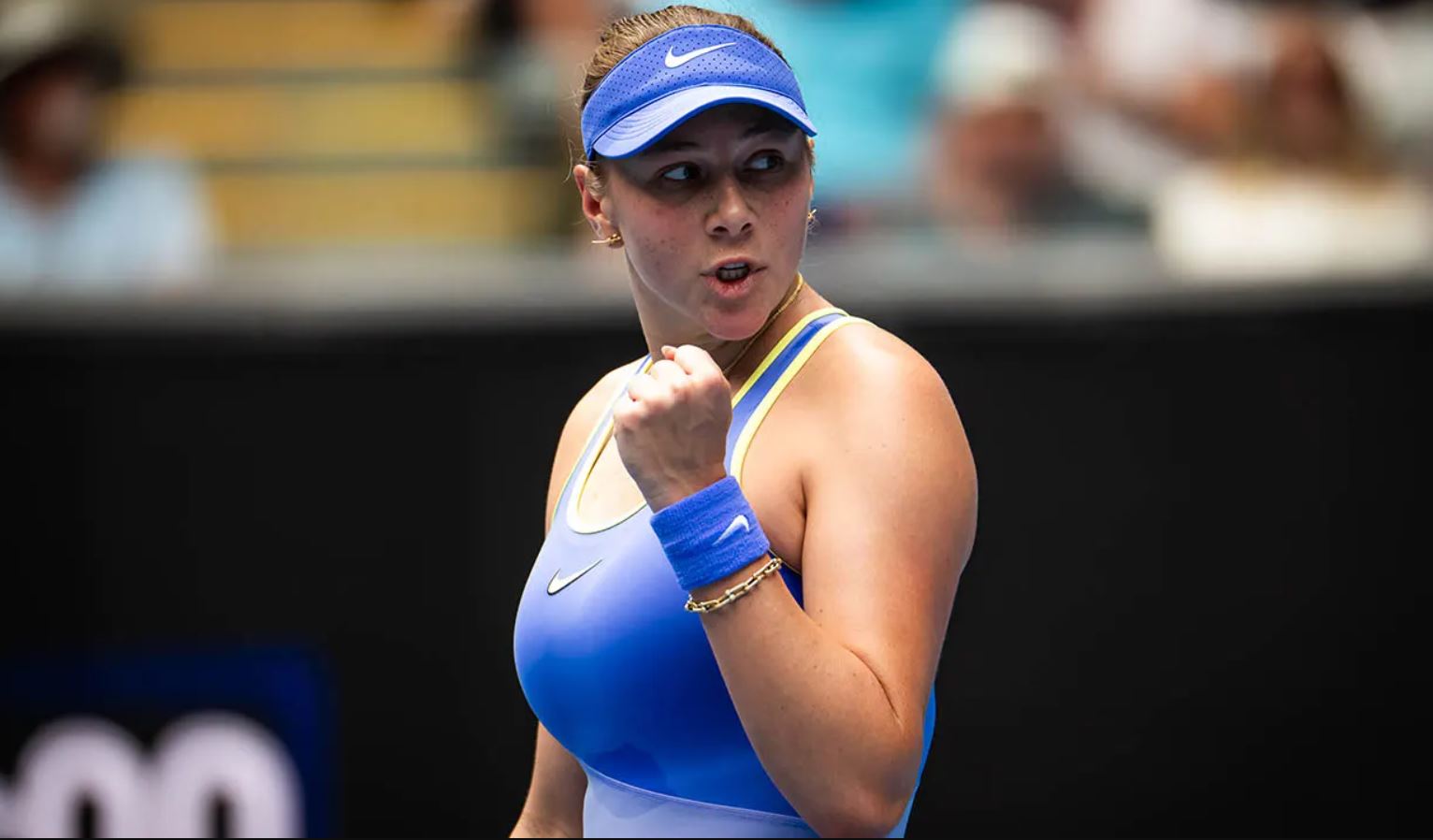
There is a specific kind of silence that falls over Margaret Court Arena when a top-five player starts to unravel. It is the sound of collective breath-holding as a forehand flies long, a racket is waved in frustration, and the psychological “hairy” moments of a Grand Slam begin to itch.
For years, the tennis establishment demanded these moments be buried. The “ice-cool” competitor was the gold standard; any crack in the veneer was labeled a weakness.
But as Amanda Anisimova marched through her second-round match at the 2026 Australian Open, she didn’t just crack the veneer, she shattered it. And then, she won.
In an era of sports psychology dominated by “mindfulness” and “staying level,” Anisimova is finding success by doing the opposite. She is staying human.
“I’m not someone or a player who likes to keep my emotions in,” Anisimova told reporters following her victory. “I feel like that actually ends up backfiring on me and I get like a little bit stiff if it goes on for a long time and I’m not able to express myself.”
It is a refreshing, if not radical, admission. For the No. 4 seed, the “stiffness” she describes along with being a physical sensation is also a competitive anchor.
By suppressing the natural frustration of a missed break point or a double fault, many players find themselves paralyzed by the effort of maintaining a mask. Anisimova has decided the mask is too heavy to wear.
During her second-round battle with Katerina Siniakova, the vocalizations were there. The gestures of exasperation were evident. To the untrained eye, it looked like a player losing her grip. To Anisimova, it was the sound of a ship righting itself.
“Sometimes it’s probably not the greatest moments of mine,” she admitted with a self-aware smile, “but I’m able to always regroup and yeah, we’re human so I think it’s important to sometimes let it out if you need to. And I’m not afraid to do that.”
This “Human Strategy” is more than just venting. It’s about metabolic clearing. By allowing the emotion to peak and pass, Anisimova prevents it from calcifying into the kind of tension that ruins a backhand. She sure is throwing tantrums, but she is also exhaling.
The results speak for themselves. Coming off a 2025 season that saw her reach two Grand Slam finals at Wimbledon and the US Open, Anisimova has developed a peculiar relationship with pressure. Most players seek to avoid the “rocky” moments of a match. Anisimova has learned to invite them in.
“I’ve always been a player who likes a challenge,” she said. “When things get a bit rocky and it’s very competitive out there, I think I thrive on that and that’s what I love about the sport is those really tense moments.”
It is this comfort in the chaos that defines the 2026 version of Anisimova. Where a younger version of the American might have spiraled after a vocal outburst, the veteran version uses it as a signal to “focus right back after.” It is a controlled explosion followed by an immediate return to tactical discipline.
Perhaps the most impressive part of Anisimova’s emotional evolution is how she has integrated her team into the process.
The player’s box is no longer just a target for venting. It is a sanctuary for regrouping. She acknowledged the difficulty of the task she sets for her coach, Hendrik Vleeshouwers, and her support staff.
“I think it’s important to use that time in the right way,” she noted, reflecting on the mid-match coaching moments. “A lot of times in the past I didn’t and I would kind of just use that time to express my frustration and not really listen to you know what my coach or team is saying.”
Now, the frustration is a prelude to listening. The “Human Strategy” involves acknowledging the “hopeless moments” and then moving past them.
“I’m trying to really learn how to actually work with my team and just keep my emotions at bay, at least when it comes to my team. I can express my own emotions, but I just try not to at them.”
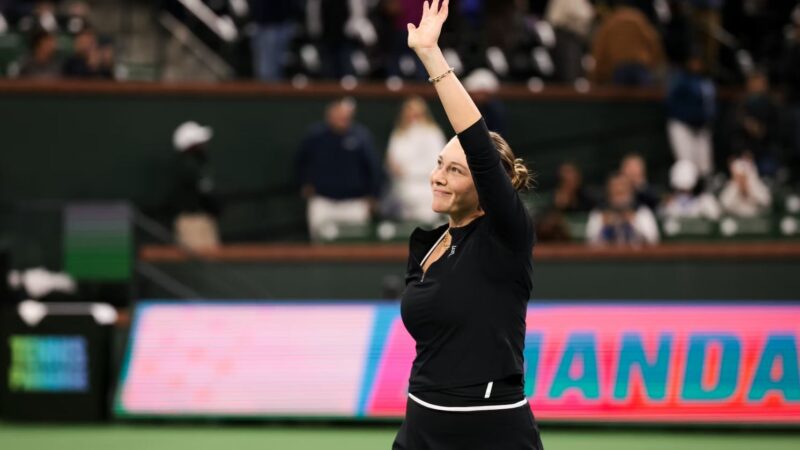
As she prepares for her third-round clash against fellow American Payton Stearns, Anisimova isn’t promising a clinical, emotionless performance. She is promising a human one.
In a sport often obsessed with the robotic, Anisimova’s willingness to be “rocky” might just be the edge she needs to finally cross the finish line and lift the trophy.