Why Stan Wawrinka embraces the nerves in his final Australian Open run
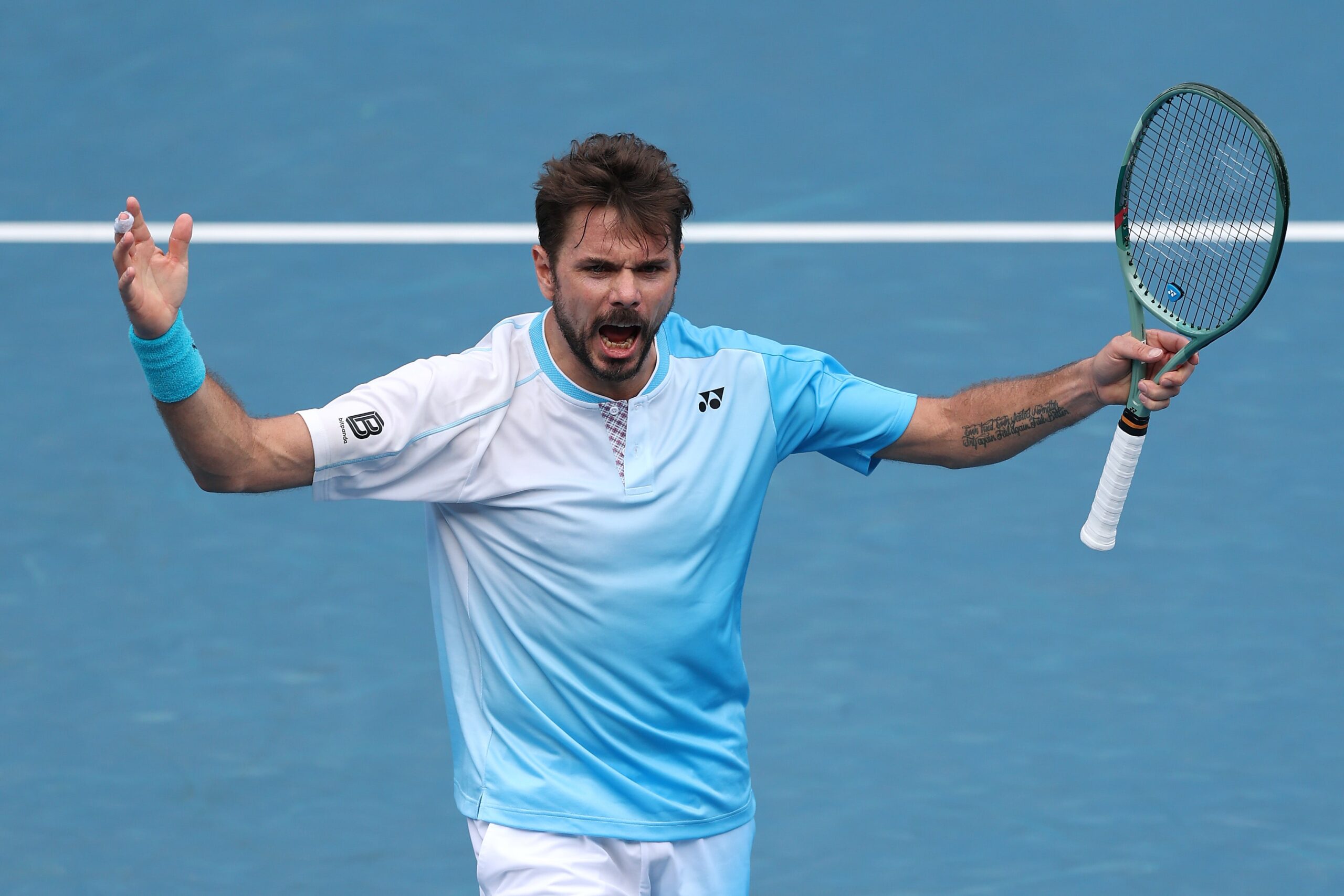
The sun was beginning to dip over Kia Arena, casting long, dramatic shadows across the blue plexicushion, but the heat of the Melbourne afternoon still lingered in the air.
For three hours and twenty-three minutes, Stan Wawrinka had been locked in a physical chess match with Laslo Djere, a man ten years his junior.
At 40 years old, in what he has confirmed will be his final season on the ATP Tour, Wawrinka isn’t just fighting opponents anymore; he is fighting time, expectations, and the creeping weariness of a body that has survived multiple surgeries.
Yet, as he sat before the press following his 5-7, 6-3, 6-4, 7-6(4) victory — his first at the Australian Open in five years — the three-time Grand Slam champion didn’t talk about his legendary backhand or the 14 aces he hammered past the Serbian.
Instead, he spoke about a much more internal, invisible force. His nerves.
When asked if there were moments today where the pressure of his 40-year-old legs or the weight of a final farewell tour made him anxious, Wawrinka didn’t reach for a cliché about veteran composure. He smiled, a weary but genuine expression of a man who has seen it all and still feels it all.
“Yeah, almost all my match,” Wawrinka admitted. “But uh no, of course I’m, I’m always nervous and that’s, that’s always been positive for me.”
For most players, nerves are a cage. A tightening of the grip, a shortening of the breath, a reason to play safe. For Stan, they are a compass. In a sport where many veterans eventually lose their edge because the routine becomes mundane, Wawrinka’s persistent anxiety is his proof of life.
“That’s mean I really care and that’s mean I really want to do well so I really pushing myself,” he explained. “But that’s when you need to be really disciplined with yourself, with your brain, with your tough on on what you have to focus during the match.”
This isn’t the first time “Stanimal” has leveraged internal turmoil.
In 2016, he famously revealed he was in tears in the locker room just minutes before the US Open final against Novak Djokovic, paralyzed by the enormity of the moment.
He went out and won that title in four sets. A decade later, the stakes have changed from trophies to legacy, but the chemical reaction in his chest remains identical.
Watching him navigate the fourth set against Djere was a masterclass in this “disciplined” anxiety. Trailing 2-4 in the set, the match threatened to spiral into a deciding fifth.
It was the moment where a 40-year-old might logically decide he had given enough. Instead, Wawrinka tightened his mental focus. He began finding the rhythm on his serve that he had spent the offseason refining, winning a staggering 86% of his first-serve points.
“I think also those match a bit longer in five set always helped me to, to relax, to be a bit more focused, to move a bit better and that’s what the, that was the case today,” he noted. “I think I start to play much better second, third and fourth set.”
There is a profound honesty in how Wawrinka views his current iteration. He is no longer the man who can out-slug the “Big Three” for five hours of relentless aggression.
He is a craftsman now, someone who uses his defensive slice to buy time and his serve to bail him out of trouble. He is also a man who refuses to lie to himself about the reality of his age.
“I know I’m not as good as as I was before and I know I’m not physical and tennis wise as good I was, I was before but that’s, that’s normal,” he said with a shrug. “I’m getting old and, and but I’m still happy with what I’m doing always trying to push my own limit always trying to be better.”
As he moves into the second round to face the young Frenchman Arthur Gea, the “butterflies” will undoubtedly return. For Wawrinka, a relaxed match would be a boring match. It would be a match that didn’t matter. And as long as he is still slogging through the heat in Melbourne, everything matters.
“I’m happy that I had the chance to win a match in slams here,” he concluded. It was a simple sentiment, but from a man who uses his nerves to fuel his discipline, it felt like a warning to the rest of the draw. The Man is still here, he’s still nervous, and he still cares far too much to go quietly.