The profound release of David Goffin’s final chapter
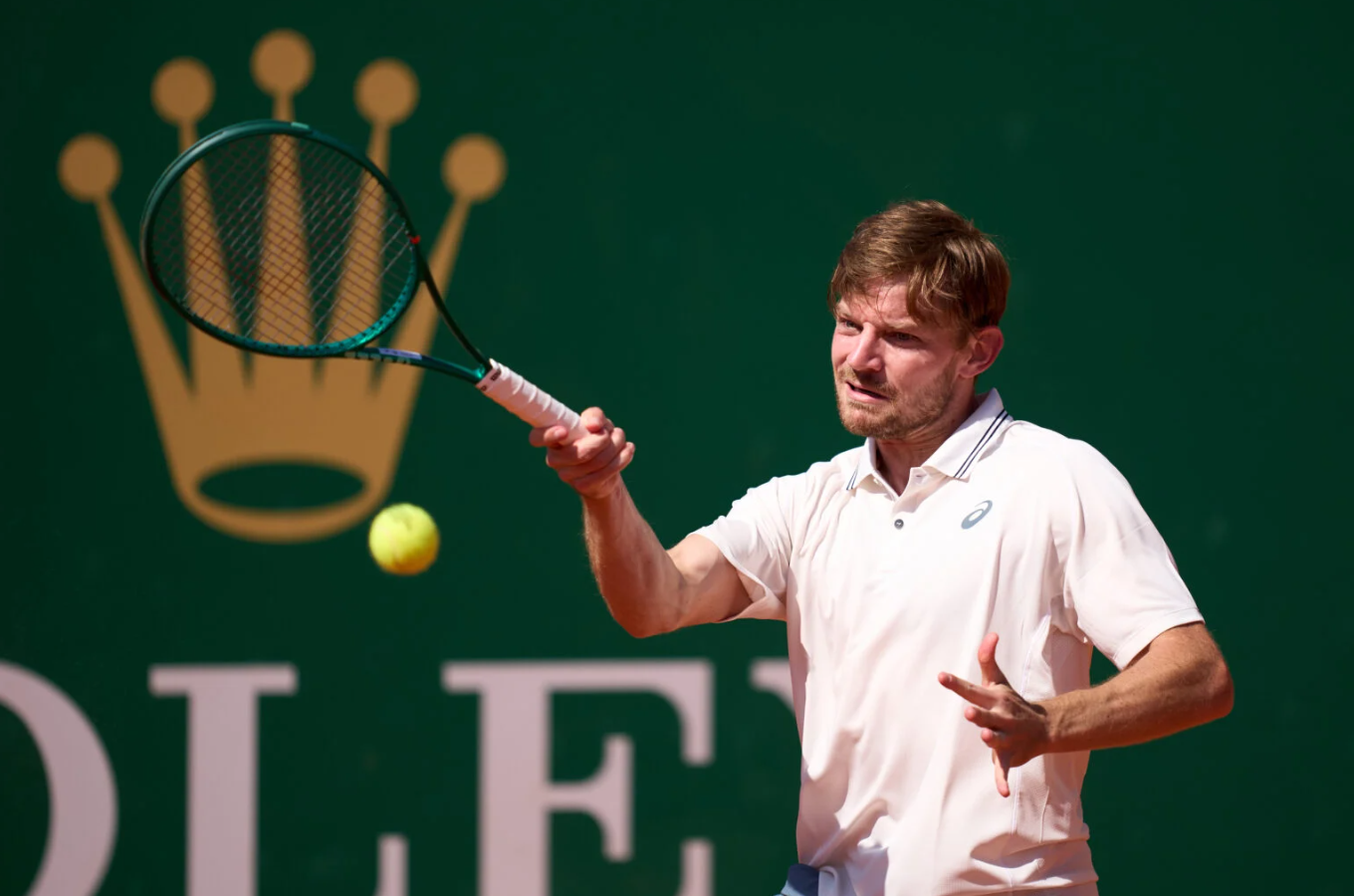
There is a specific kind of gravity that defines the life of a professional tennis player. A constant, invisible weight composed of ranking points, physical maintenance, and the relentless hunger to stay relevant.
For over a decade, David Goffin has carried that weight with the quiet diligence of a craftsman. But as he sat in the press room following a grueling three-set battle against Emilio Nava in Monte-Carlo, the former World No. 7 didn’t look like a man burdened by defeat.
He looked like a man who had finally learned how to breathe. The scoreboard showed a 6-3, 6-7, 7-6 loss, a dramatic exit by any definition, but the result felt secondary to the revelation that preceded it.
This was the first time Goffin had stepped onto a competitive court since announcing that 2026 would be his final season on tour. In doing so, he has unlocked a psychological gear that many players spend their entire careers chasing.
Pure, unadulterated freedom.
For Goffin, the decision to retire was the culmination of a long, internal dialogue. The second half of last season was marred by a foot injury, followed by a knee issue that delayed his start to this year.
As his ranking slipped outside the top 100, the mental hurdle of the climb became taller than any opponent across the net.
“There is something inside that it’s released, and I like what I feel,” Goffin admitted, reflecting on his performance. “More relaxed. I have no pressure. I just try to take all the positive things on the court. I’m enjoying every moment, and it is something that it is quite nice to feel.”
That sense of release was evident in his play. Despite the loss to Nava, Goffin noted that he had played his two best matches of the year in Monte-Carlo. It is the ultimate tennis paradox. Often, it is only when a player stops caring about the future that they finally master the present.
The transition from a top-tier competitor to a retiree-in-waiting requires a level of self-honesty that is rare in a sport built on bravado.
Goffin spoke candidly about the little things — the mornings where the motivation wasn’t there, the physical toll of a high-level game, and the realization that he was no longer as eager as before.
For months, he had been telling himself the standard athlete’s mantra.
“I have to continue, I have to continue. But eventually, the body and the spirit stopped agreeing with the script. It was a difficult decision, but at the same time, sometimes it’s not the decision-making that is difficult. What is difficult is to realize what you feel inside of yourself,” he shared.
“Once you realize that, making the decision is easy. I said, I want to do something else now.”
By acknowledging that he was no longer willing to put in the immense effort required to return to the world’s elite, Goffin ended a conflict. The struggle to be the David Goffin of 2017 — the man who beat Nadal and Djokovic on these very courts — was over.
He could finally just be David Goffin, the tennis player, enjoying a final lap.
While the retirement is official, the farewell tour is far from a somber affair.
Goffin isn’t interested in a grueling, full-season schedule. Instead, he is cherry-picking the moments that matter, looking for the tournaments he loves and the atmospheres that remind him why he picked up a racket in the first place. The ultimate destination is a homecoming in Belgium.
“The goal is to finish the year in Brussels. That would be amazing to finish in Belgium,” Goffin said with a smile. “But then we will see. Still have opportunities, but time now is just to enjoy every moment on the court.”