Germany slams the door on three decades of hurt as Alexander Zverev conquers Paris
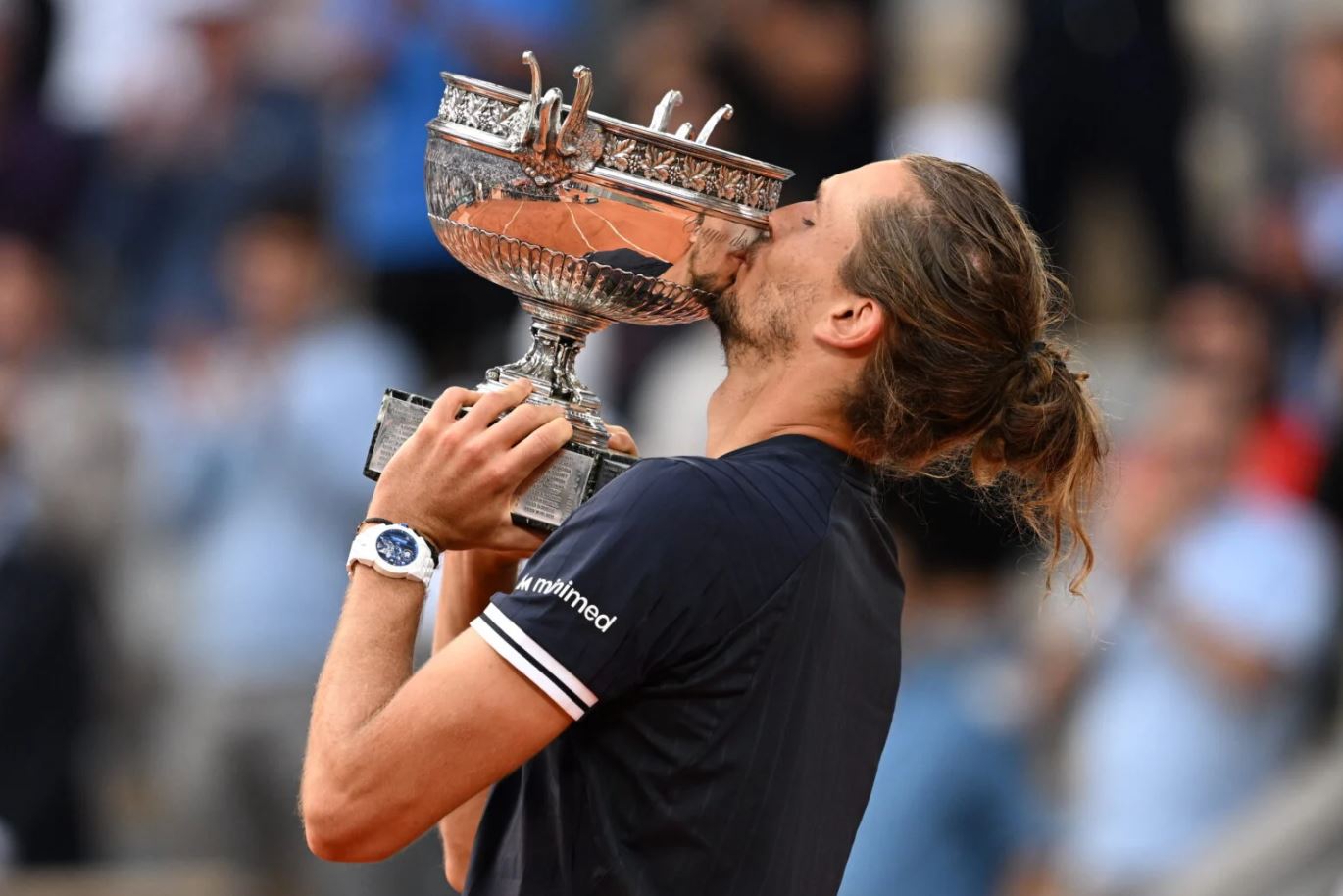
The modern era of German men’s tennis has long been defined by ghosts.
For thirty years, every booming serve, every desperate baseline slide, and every agonizingly close Grand Slam final played out under the long, heavy shadow of Boris Becker and Michael Stich.
Since Becker’s final Major triumph at the 1996 Australian Open, German tennis fans have looked to the horizon, waiting for a savior to break the curse. On a sweltering afternoon at Court Philippe-Chatrier, the wait finally ended.
Alexander “Sascha” Zverev shattered three decades of national heartbreak, surviving an epic, nerve-shredding 6-1, 4-6, 6-4, 6-7 (5), 6-1 battle against Italy’s Flavio Cobolli to claim the 2026 French Open title.
In doing so, the 29-year-old captured his elusive first Grand Slam title on his 41st major appearance and rewrote the history books for an entire nation.
“I think first time a German has won Roland Garros in history,” Zverev noted during his post-match press conference, the exhaustion visibly giving way to an immense, almost disbelieving pride.
“On the male side, of course, on the on the female side, we had Steffi winning a lot of these. But on the male side, I think it’s it’s a very big trophy for Germany. Again, the first to ever do it.”
To truly understand the weight of this triumph, one must look back to the dark period Zverev has endured over the last few seasons.
Just a year ago at Wimbledon, a defeated Zverev sat before reporters admitting he felt entirely empty, stranded miles away from the sport’s elite tier. His tennis was fractured, and his body was failing him.
“Before that last year was was not a good year for me,” Zverev admitted, reflecting on the arduous road back.
“I didn’t play well. I was struggling a lot with a lot of physical issues. I was struggling with my tennis. I didn’t I just didn’t play well and I mean for sure this trophy helps the belief a lot.”
That belief was tested to its absolute absolute limits against Cobolli.
After sprinting through the opening set, the familiar demons of Zverev’s past major finals — where he held an agonizing 0-3 record — began to creep into the Parisian air. By the fourth set, Zverev was visibly locking up, fighting off severe tension that manifested as full-body cramps.
Yet, in a bizarre psychological twist, the physical agony became his salvation. By forcing his mind away from the suffocating pressure of the moment, the pain allowed his tennis to flow. He stopped steering the ball and started punishing it.
When Cobolli’s final overhead sailed out in the fifth set, Zverev did not jump in celebration. He simply collapsed flat on his back onto the red clay, staring at the Parisian sky as thirty years of national expectation and a career’s worth of personal trauma washed away.
“And then when I was on the ground all the emotions came out because um again I think this court is very very special to me but it’s also special in a very positive way but also special in a negative way because I had some of the toughest moments of my life here um or of my tennis career,” Zverev said.
“I was laying on this court with an injury that I didn’t know if I’ll ever come back from. Um I lost the Grand Slam final here. So all of those memories for me, they’re not wiped out. They still would be with me, but this one will beat all of them.”
Steffi Graf dominated these grounds with six titles, but no German man had ever hoisted the Coupe des Mousquetaires in the Open Era. By breaking that final ceiling, Zverev has unlocked a profound sense of competitive peace.
The tag of “the best player never to win a Slam” has been permanently revoked.
Hours after the final ball was struck, still clutching the glittering silver trophy, a loose, remarkably candid Zverev grinned at the media, completely unbothered by the decades of pressure he had just carried across the finish line.
“To be honest, I’m a little bit drunk already,” Zverev smiled, the ultimate validation of a historic job well done. “So I just repeat myself a little bit more than I’m used to, but I’m I’m just happy to be sitting next to this trophy.”