Crossing borders and war zones for the love of Ukraine
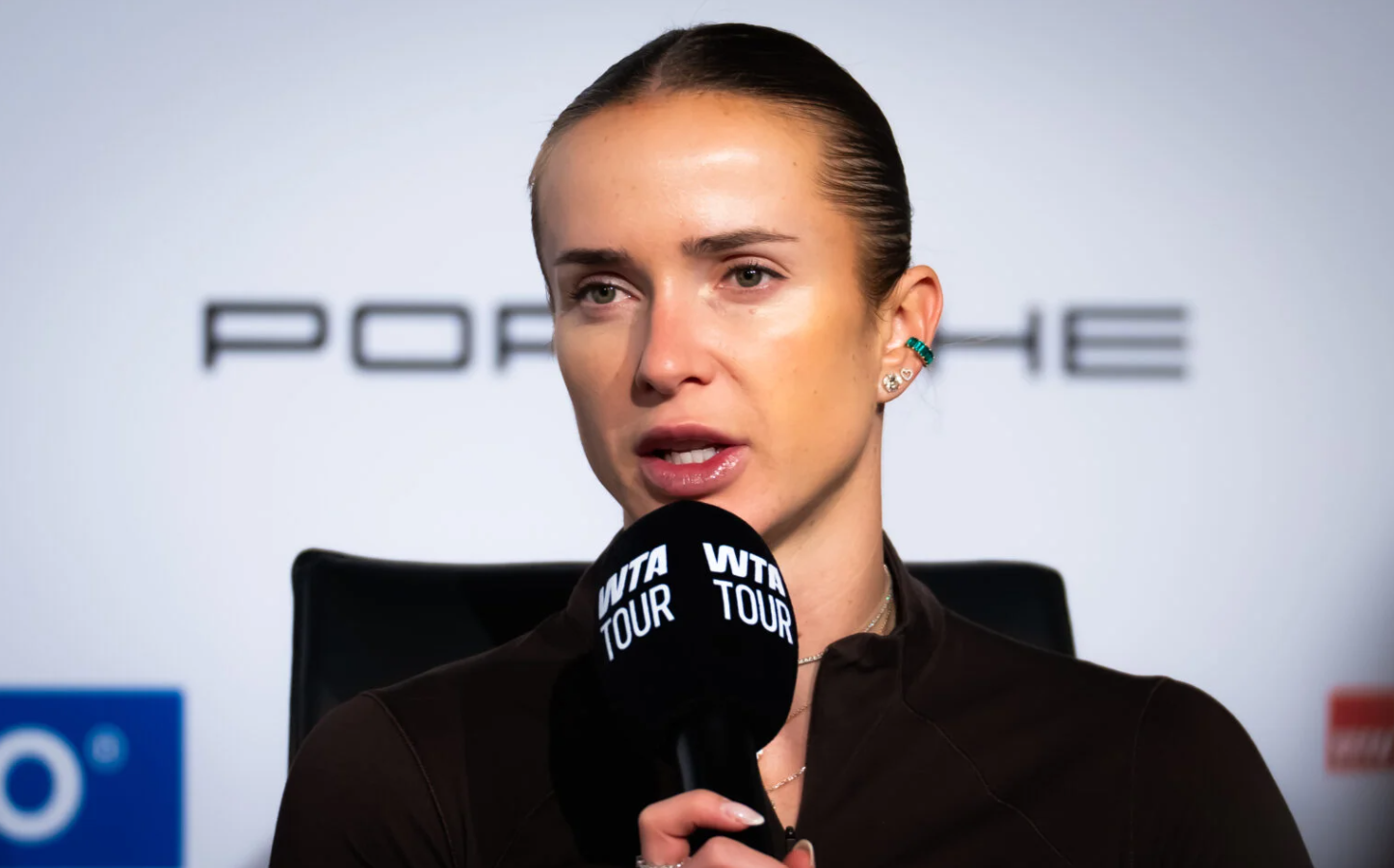
While most players at the Porsche Tennis Grand Prix are debating the nuances of Stuttgart’s indoor clay, Elina Svitolina’s mind occasionally drifts to a different kind of dirt. The roads leading to Kyiv.
On a tour defined by private jets and five-star logistics, Svitolina has become a specialist in a much more grueling itinerary. It is a journey that begins in the transit hubs of Europe and ends in a city that has spent over four years under the shadow of sirens.
For the world’s top-ranked Ukrainian, the commute home is not just a trip. It is a twenty-four-hour odyssey that bridges the gap between the pristine world of professional sports and the harsh reality of a nation at war.
The logistics are as exhausting as a three-set marathon. Because the airspace over Ukraine remains closed to civilian travel, Svitolina’s path home is a multi-modal endurance test.
“The travel takes time, actually,” Svitolina shared during her media availability in Stuttgart. “It, like, can be 12, 15 hours I travel. I travel to Warsaw first, and then I take a car for another, like, 10 or 12 hours to go to Kyiv.”
Think about that for a moment. In the time it takes to fly from London to Singapore, Svitolina has only just crossed the Polish border.
There are no direct routes, no shortcuts, and certainly no guarantees of comfort. Yet, despite the grueling nature of the 12-hour drive through the night, she views these trips as non-negotiable.
“Of course, you know, I take a risk,” she admitted with a grounded perspective. “I’m very lucky to have an understanding husband who lets me go back to my country. It’s very important for me to really go back and, yeah, do these kind of things that I mentioned.”
The “things” Svitolina mentions aren’t leisure activities.
When she enters Ukraine, she swaps her tennis rackets for the responsibilities of her foundation. Whether it is hosting masterclasses for 500 children in small provincial cities or restructuring mental health programs for youth traumatized by the conflict, her presence on the ground is her primary mission.
For Svitolina, the emotional payoff of being physically present outweighs the logistical nightmare.
“When you see the eyes lit up in their faces, really, really touching my heart, and I want to do more and more,” she said. “As soon as I have a moment, I go back to Ukraine, and yeah, I feel like it’s a thing that I have to do.”
Beyond the philanthropy, there is a deeply human element. Family. While the world sees a Top 10 athlete, Svitolina is also a granddaughter navigating a fragmented world. “Also to see my family, because my grandmother lives there, and I want to go and see her as much as I can,” she explained.
Stuttgart offers a surreal backdrop for such reflections. The tournament is famous for its high-performance cars and the quiet hum of German efficiency. It is a world away from the “heavy days” Svitolina describes back home.
“It’s of course very, very tough to not have opportunity to fly back as we used to fly to Kyiv and just be there in couple of hours,” she noted, reflecting on the simplicity of life before February 2022.
However, the difficulty of the journey seems to fuel her performance on the court.
Svitolina spoke candidly about how the struggle of her people serves as a radical perspective-shifter. When she steps onto the clay in Germany, she is playing for a country that is “being under the attacks every single day.”
“All the emotions, all the thankful support that I get from Ukrainian people is, you know, I couldn’t imagine doing any different,” she said.