Sorana Cirstea and the psychological power of the finish line
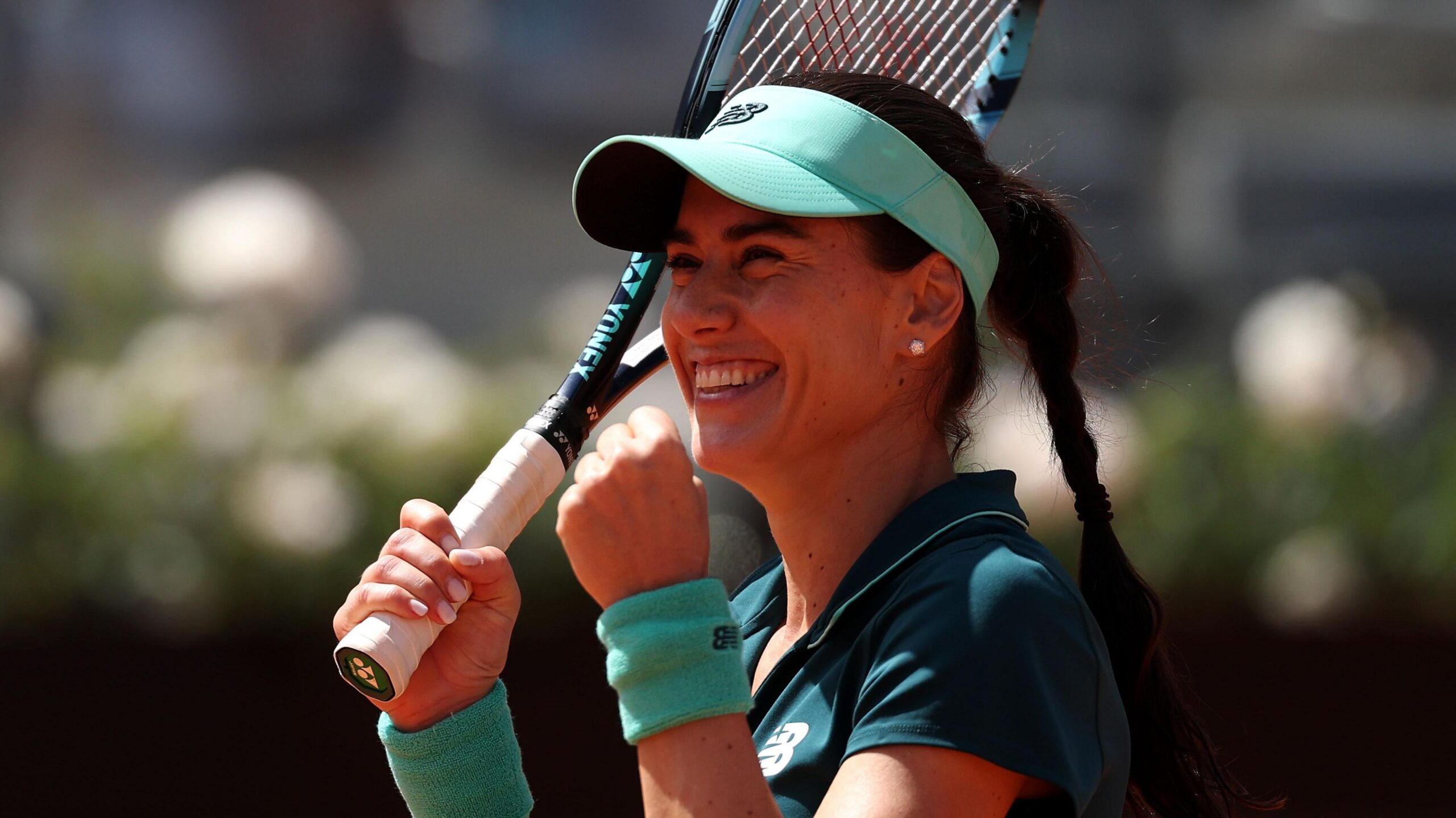
The clay of Rome has a way of extracting the truth from a player. Under the sweltering Italian sun, where every point is a physical interrogation, the cracks usually begin to show.
But as Sorana Cirstea walked into the mixed zone after a clinical 6-2, 6-4 dismissal of Linda Noskova, she didn’t look like a woman burdened by the grind. She looked like a woman who had just found the keys to a cage she had been living in for twenty years.
At 36 years old, the Romanian veteran is playing the best tennis of her life.
She is sharper, faster, and more consistent than the version of Cirstea that broke onto the scene as a teenager. The reason for this late-career renaissance is as counterintuitive as it is fascinating: she has already checked out, and in doing so, she has never been more present.
Earlier this year, rumors swirled that Cirstea was planning to hang up her racquets at the conclusion of the 2026 season. In Rome, she confirmed that the exit strategy is real, and more importantly, it is the fuel behind her current fire.
When asked if the retirement talk was a joke, her response was unwavering. “No, it was not a joke,” she said. “Again, I’m enjoying every single week. I’m coming from a place where I really have no pressure. I don’t want to start putting pressure on myself right now”.
“I think in a way it freed me up a little bit, all those expectations just maybe went through the window because I didn’t have to prove anything anymore”.
In the high-stakes theater of the WTA Tour, the “last dance” can often be a somber, sentimental affair—a long goodbye filled with more nostalgia than results.
Yet Cirstea has flipped the script. By placing a definitive end date on her career, she has inadvertently performed a psychological exorcism. The ghosts of “what if” and the weight of the rankings have vanished, replaced by a clarity that only comes when the finish line is in sight.
“I think in a way it freed me up a little bit, all those expectations just maybe went through the window because I didn’t have to prove anything anymore,” Cirstea explained.
This sense of liberation is visible in every aggressive baseline strike and every composed service game. For two decades, Cirstea was known as a “streaky” player—capable of beating anyone on her day but prone to the emotional fluctuations that haunt the mid-tier of the rankings. In 2026, the fluctuations are gone.
Despite the lack of pressure, do not mistake her serenity for a lack of intensity. Cirstea is quick to point out that she hasn’t traded her training sessions for sightseeing tours. The retirement announcement wasn’t an invitation to relax; it was a challenge to go out on her own terms, at her absolute peak.
“I’ve always been very professional,” she asserted. “Even if I announce this is going to be my last year, I still work very, very hard. I didn’t want to come here and be a tourist. I wanted to prove I still have the level. I wanted to prove I can push the top girls”.
The numbers back her up. Closing in on the Top 20, she is a nightmare draw for the tour’s elite. Her consistency, which she identifies as her biggest improvement this year, has become her hallmark.
“I think the consistency. I’ve always been a bit up and down. This year I feel like I managed to find the level every single week that I was competing,” she noted. It is a remarkable feat for a player who admits she is “way younger than what my passport says”.
In a sport increasingly dominated by data and artificial intelligence, Cirstea remains a refreshing holdout—a romantic in a world of algorithms.
While her peers are turning to ChatGPT and AI for scouting, Cirstea is turning to her coach and her books. She is a player who values “the connection, the emotions, everything that makes life wonderful”.
This “old school” approach extends to her perspective on the game’s frustrations. When asked about losing her cool on court, her answer was grounded in a deep acceptance of her own humanity. “Important is to accept,” she said. “I think this is the hardest thing sometimes. We don’t accept… I do believe that the more composed you are, the better you play. Of course, I have my moments, as well. We are human”.
As the sun sets on her career, Cirstea isn’t looking at the rankings or the legacy she leaves behind. She is looking at the ball. She is looking at the crowd. And she is looking at a “second life” that includes a family and a chance to give back to the sport she loves.
But for now, the tennis world is witnessing a rare phenomenon: a champion who is winning not because she has everything to gain, but because she has already decided she has enough.
“This year has been going great, above any expectations I had,” she concluded with a smile. “I’m just enjoying. I love this sport. I love tennis”. If this is indeed the end for Sorana Cirstea, she is proving that the most dangerous player on the court is the one who has finally stopped playing for everyone else and started playing for herself.