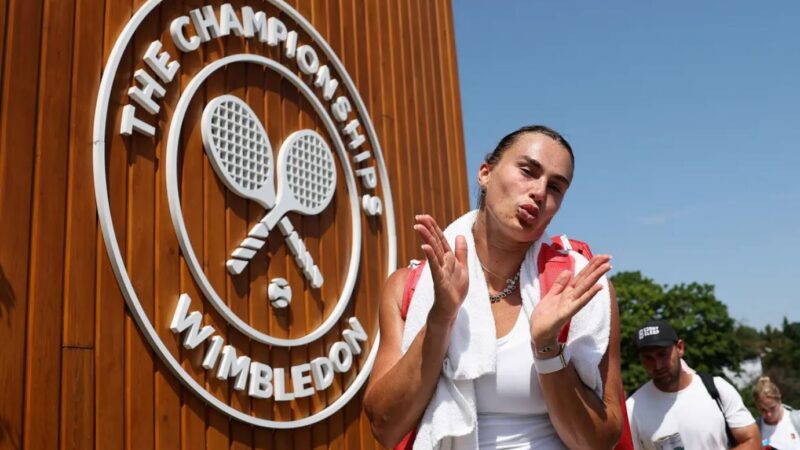
Inside the mental masterclass that propelled Diana Shnaider past Aryna Sabalenka
The red brick dust of Court Philippe Chatrier was not the only thing swirling into the Parisian sky on Wednesday afternoon.
As a sudden, violent wind swept across the 2026 French Open quarterfinals, it brought with it the ghosts of tournaments past and a psychological storm that would completely upend the women’s draw.
When Aryna Sabalenka stepped up to serve at 6-3, 4-1, 30-0, the script seemed safely written. The World No. 1 was cruising, her heavy-hitting game seemingly bulletproof against the unseeded Diana Shnaider.
But Grand Slam tennis rarely adheres to a script when the elements interfere. The tournament organizers had opened the stadium roof right as warm-ups finished, transforming the clay court into a gritty, unpredictable wind tunnel.
As the bluster intensified, Sabalenka’s formidable game began to drift. Her baseline power, usually a weapon of absolute destruction, turned erratic. And across the net, a 22-year-old playing in her very first major quarterfinal was watching, calculating, and waiting.
Shnaider knew the history. She had watched the 2025 Roland Garros final twelve months prior, witnessing how the very same Parisian wind had dismantled Sabalenka’s composure during a heartbreaking loss to Coco Gauff.
As Sabalenka’s shots began to fly wide and the World No. 1 grew visibly exasperated, Shnaider felt a familiar blueprint taking shape.
“Of course I knew the final like last year I watched it,” Shnaider admitted in the press room after the match. “I knew that it was also super windy. So of course I had that thought in the back of my mind that she was struggling with a cocoa last year and I was like, ‘yeah, I got to use this opportunity like I need to just adjust and do my best.'”
Adjusting meant managing her own volatile emotions first.
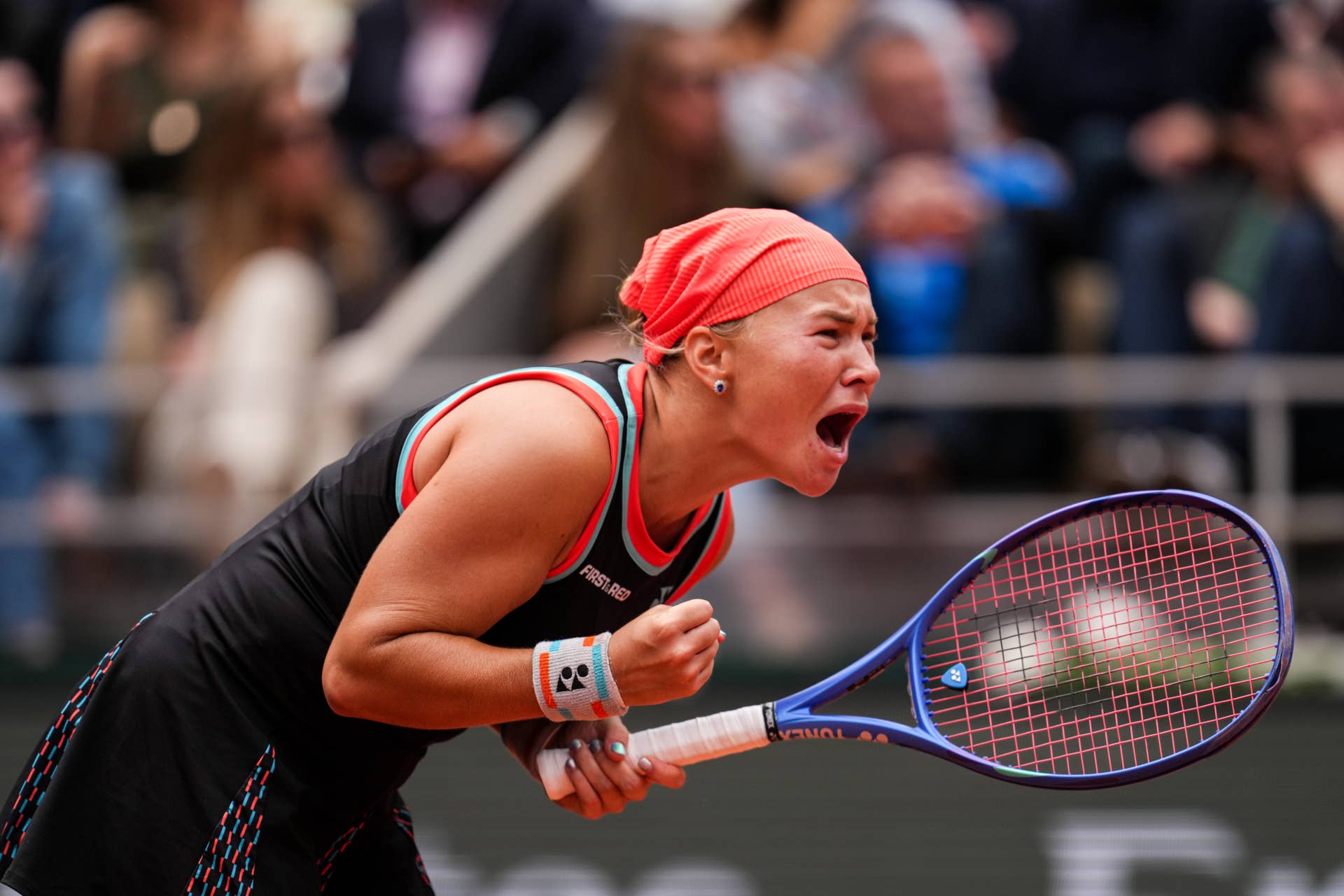
Shnaider is no stranger to wearing her heart on her sleeve, but against the top seed, she recognized that internal silence was her greatest tactical weapon. While Sabalenka began screaming at her box, Shnaider turned inward, building a mental fortress point by point.
“I mean, of of course I saw some moments of of her of frustration,” Shnaider said. “And I mean I I I know Arena that she’s very emotional person. Kind of I am too. Um, but I feel like this tournament what I’m doing pretty good is not letting like my negative emotions and thoughts uh to be in sort of way of uh me playing my best tennis.”
Instead of catching the panic radiating from the other side of the net, Shnaider used it as a green light to press forward.
“For sure there was a lot of moments where I could be also super pissed at myself and super frustrated with everything what was happening,” Shnaider reflected. “Uh, but again I feel like when I saw her being emotional I was like, ‘yes like you’re in the right direction like you got to stay you just focus on yourself like don’t don’t focus too much on her what she’s talking to her team or whatever what she’s doing.’ Uh, just I was just trying to just only think about myself, what I have to do and just go point by point.”
The strategy worked with devastating efficacy.
Trailing 5-3 in the second set, just two points from elimination, Shnaider abandoned her passive slices and began to attack Sabalenka’s second serve, exploiting the top seed’s growing hesitation.
When Shnaider clinched the second set 7-5, the psychological shift was absolute. Sabalenka sank into what she later described as a “deep, dark hole,” while Shnaider soared.
The third set was an absolute masterclass in emotional management. As Sabalenka collapsed into a flurry of 57 unforced errors, Shnaider walked away with the final ten games of the match, handing the world number one a stunning 6-0 bagel to seal her place in a maiden Grand Slam semifinal.